
Chimney Services
Sealing your Geigers Landing chimney, from prep to final coat
Absorption, leaks and what a repellent changes
Water repellents are most effective at reducing the water that brick absorbs, Technical Note 6A notes, while most water that penetrates a wall gets in at separations and cracks between brick and mortar or at junctions with other materials. A repellent changes the first and does little for the second.
A straight estimate therefore separates the two. If your Geigers Landing chimney is absorbing rain through sound brick, a repellent can help. If water is entering at a joint, the flashing or the crown, the repair for that entry point comes first and is priced on its own.
Brick, stone and stucco chimneys
Each masonry material needs a product made for it. Technical Note 6A stresses selecting only coatings intended for clay brickwork when treating brick, and notes that coatings formulated for other materials may even harm brick. The ChimneySaver data sheet lists clay brick, mortar, natural stone and portland cement stucco among the surfaces it is made for.
Our specialists identify what your Geigers Landing chimney is built from before choosing a product. A cracked stucco chimney gets stucco repair first, and a stone chimney is checked joint by joint, since a repellent protects sound surfaces and leaves open gaps exactly as they were.
Applying a coating the way its maker intends
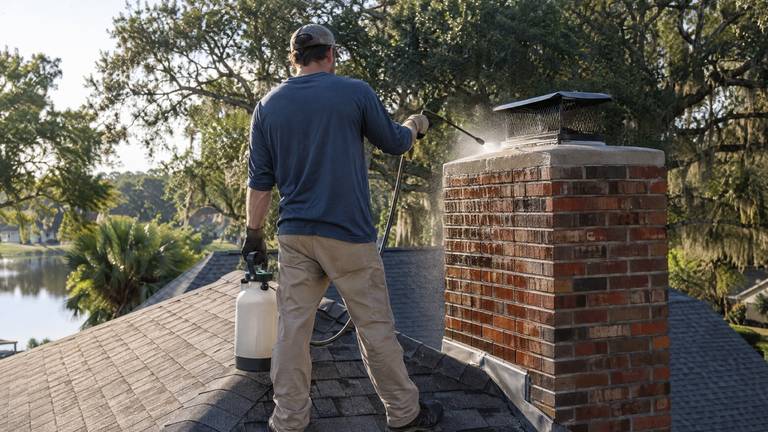
Experience with the specific coating matters, Technical Note 6A says, and it asks that coatings be applied according to the coating manufacturer's directions. Preparation, weather limits, coverage and the protection of nearby surfaces are all spelled out in those directions.
Chimney treatment is part of our regular masonry work, and we follow the product's own instructions on each of those points. Nothing is thinned, rushed or sprayed in the rain to finish early. Our workmanship warranty and our 100% satisfaction guarantee cover the finished treatment.
Chimney surfaces that stay untreated
Some parts of a chimney should not get a masonry repellent. One manufacturer's instructions rule out asphalt-based materials and painted or glazed brick, and describes the product for exterior, above-grade masonry, which leaves out the flue lining and the metal flashing.
We mask what should stay untreated and treat only the surfaces the product is made for. If the cap, flashing or crown needs work, that is quoted as a repair on its own line.


