
Chimney Services
Our chimney cap specialists at work in Forest City
Our experts check the flue, the tile and the crown before a new cap is ordered for your Forest City home.
Measure the flue tile before choosing a cap
Flue tiles come in square, rectangular and round shapes, and their outside size decides which caps can fit. A bolt-on cap has to slide over the tile and clamp to it, so a measurement taken at the top is the only reliable one. Sizes guessed from the ground or from an old receipt often miss.
We measure each tile, note how far it rises above the crown and check that it is sound enough to hold a clamp. Those three findings set the choice between a single-flue cap, a larger crown-mounted cap or a cap made to order.
Crown-mounted caps for several flues
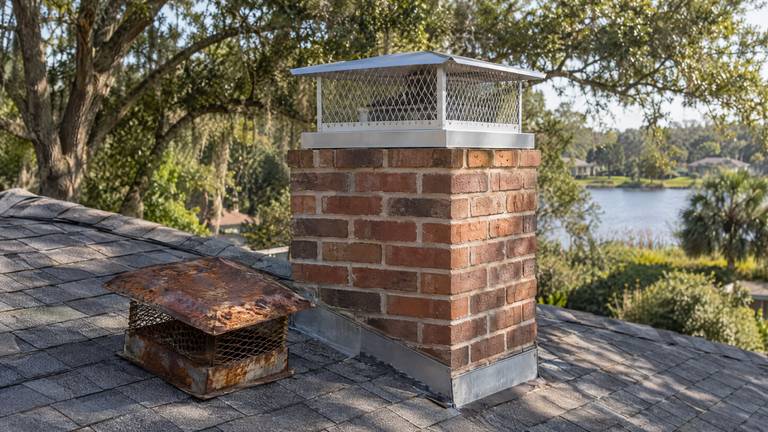
Where two or more flues rise close together, one cap can cover them all. This kind of cap is fastened to the crown with a flange, adhesive and masonry screws, and the maker's guidance keeps each flange edge at least one inch from the edge of the crown so the fasteners do not crack it.
A crown-mounted cap depends on a crown that is sound and flat enough to seat the flange. We check the surface, the tile heights and the spacing between flues before recommending one. When the crown is failing, the cap waits until the crown is repaired.
Chimney swifts and your capping decision
Chimney swifts build their nests on the inside walls of chimneys while they breed. Federal law, the Migratory Bird Treaty Act, makes it illegal to harass, injure or kill the birds or to disturb their eggs or nests, as the U.S. Fish and Wildlife Service points out. They reach the country in March or April and head south in August or September.
The same agency asks owners not to cap a chimney just to keep wildlife out, and it advises capping a flue with a metal lining so birds are not trapped inside. The decision is yours, and we never fit a cap over an active nest.
Leaves and nests in an open flue
An uncapped flue collects leaves, twigs, seed pods and nesting material, and much of it lands on the smoke shelf where it cannot be seen from the fireplace. Dry debris close to a fire is a hazard, and wet debris holds moisture against the masonry.
Before we fit a new cap, we look down the flue for blockage. If the flue needs sweeping, we tell you and price it, so the cap does not end up closing debris inside the chimney.


