
Our Process
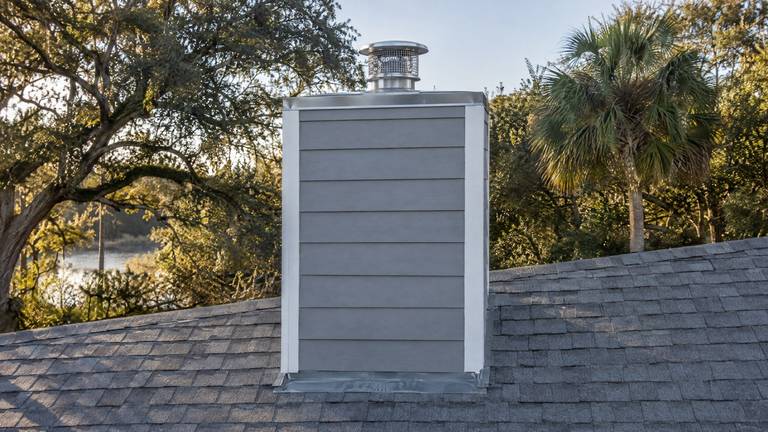
Chase cover work on Forest City homes
Galvanized or stainless steel for the new cover
A zinc coating is what protects galvanized steel. According to the American Galvanizers Association, temperature, humidity, rainfall, sulfur dioxide and air salinity decide how quickly that coating is used up, and once it is gone the steel beneath begins to rust.
Stainless steel does not depend on a coating and costs more to buy. Our team prices both metals side by side for your Forest City home, so the choice is made with the real difference in front of you. Whichever metal you choose, the cover still needs slope, a raised collar and a drip edge, and our specialists explain how each metal is expected to age on a well-drained top.
Tracing water in a factory-built firebox
Water on the floor of a factory-built fireplace can come from the chase cover, the storm collar, the termination cap, the siding or the roof flashing at the base of the chase. A new cover fixes only the first of those. Our pros also read the pattern of the water inside the firebox, since a drip down the pipe and a stain on the back wall point to different sources.
We check the path from the top down, beginning with the cap and storm collar and finishing at the roofline. The estimate for your Forest City property names the source we found and any other defect we saw, and a new cover is proposed only when the cover is at fault.
Chases that rise from the wall or from the roof
Some chases run up the outside wall from the ground, and others sit on the roof. A roof-mounted chase has flashing where it meets the shingles, and that junction can leak on its own even when the cover is sound.
We inspect the base of the chase along with the top, so the estimate separates cover work from flashing or roofing work. On a home in Forest City with both problems, each one is priced on its own line. A chase that rises from the ground also has a base and lower siding to consider, and we note any water damage there while we are on site.
From measurement to installation day
The first visit is the free inspection, where we look at the cover, collar, storm collar, cap and deck and take measurements. You then receive a written estimate listing the metal, the gauge and any related repair.
Once you approve it, the cover is fabricated to your measurements and installed on a scheduled day. The crew protects the roof around the chase, removes the old cover and hauls it away when the job is done. If the deck needs repair, that work is done on the same visit where possible, so the chase is never left open between trades.


