
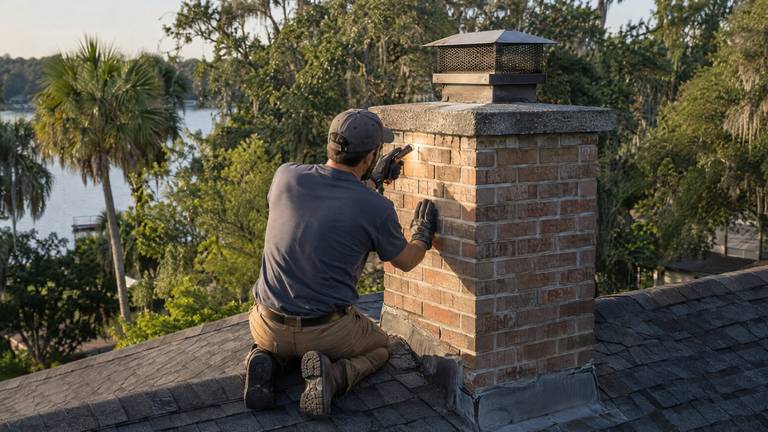
Chimney Inspection
Inside a chimney and fireplace inspection
Every inspection in Forest City follows the questions NFPA 211 asks about soundness, deposits and clearances.
Firebox walls and floor
A masonry firebox is lined with firebrick, and a factory-built fireplace uses refractory panels. We look for cracked brick, missing mortar, loose panels and gaps where the firebox meets the hearth.
Small cracks can often be repaired, while a panel that has broken through or a wall that has lost its mortar may need replacement. For a factory-built unit, the maker's instructions decide what counts as acceptable wear on a panel. We explain which condition you have and whether the fireplace should be used before the repair is done.
The cleanout door at the base
A cleanout opening near the base of each flue is a Florida Building Code requirement for masonry chimneys. A door that is rusted open or missing can let air, water or animals into the chimney.
We check that the door opens, closes and seals, and we note deposits or debris collected behind it. Debris at the base can also show what has been falling down the flue. A damaged door is a small repair when it is caught early, and it is priced on its own line if you want it done.
Each flue and the appliance it serves
A chimney with more than one flue can serve a fireplace, a furnace, a water heater or an opening that is no longer used. Each flue is inspected for the appliance it serves, since each has different requirements.
We confirm which flue belongs to which appliance where that can be traced and note any flue that is no longer connected. An unused flue still needs a cap or a closure to keep out rain and animals. When one flue has been left serving a smaller appliance on its own, we explain whether its size still suits that appliance.
Connectors and thimbles through the wall
Where an appliance connects to a masonry chimney through a wall, the connector pipe and the thimble that carries it through the masonry are part of the inspection.
Rust and loose joints on the connector come first, then how it enters the flue and the clearance to nearby combustible material. A connector that pushes too far into the flue can restrict it, and one that has pulled back can leak exhaust. Problems here are listed with the appliance they affect.


