
Our Services
How our technicians fit a gas log set
Everything is priced in writing before you pick a set, and there is no charge for the inspection.
Mantels and walls above a vent-free set
With a vent-free set, all the heat stays in the room, so the wall and mantel above the opening matter. One maker requires noncombustible or heat-resistant material immediately above the fireplace opening and limits how far a wooden mantel can project at a given height. That manual says a set that cannot meet those clearances must be run with the damper open. A vented set sends most of its exhaust up the flue, so these particular figures belong to the vent-free choice.
We measure the mantel height and projection against the chosen set's figures during the inspection. If the numbers do not work, we show you the options before anything is ordered.
Supply pressure the burner needs
Every burner lists a minimum and a maximum inlet pressure, and the figures differ between natural gas and propane. One maker warns that low pressure keeps the oxygen depletion sensor pilot on its vent-free set from working properly, and that the piping has to be sized for the burner's full flow, with long runs needing a larger line.
We check the supply with a gauge where a test point allows and compare it with the manual. If the piping is too small or the pressure too low, that correction goes to a gas contractor, and we note it in the quote before any set is ordered. Pressure readings are noted in the written record, so the next technician starts from a known figure.
Every log has one right position
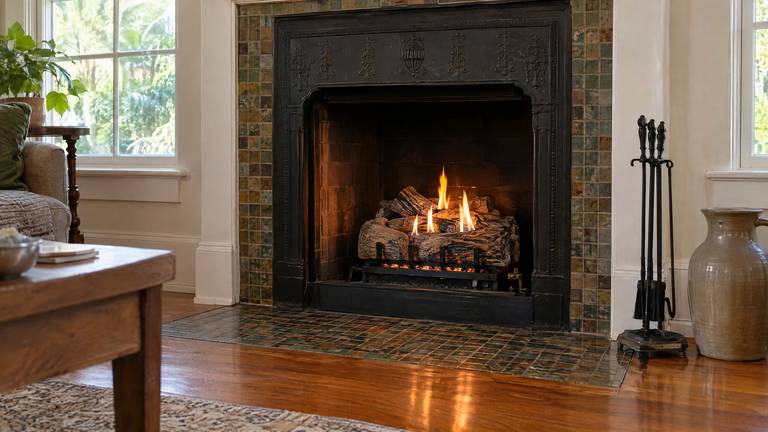
Log sets come with a placement diagram, and one maker says the set will not work as intended if the logs are not correctly positioned. Each log sits firmly in its place, the spacing between logs is kept, and the flames should not strike any part of the logs. Small changes matter. A log turned the wrong way or moved an inch toward the burner can put it in the flame and start a patch of soot.
We place the logs step by step from the set's own instructions and check the flame once it is burning. If the pattern is wrong, we adjust to the diagram until it matches. We also show you the layout so you can spot a log that has shifted.
Hot logs and hot glass
Gas logs and the surfaces around them stay hot for some time after the flame goes out. One maker's manual asks that children and adults be warned about hot surfaces and that anyone repositioning a log use heat-resistant gloves or wait until it has cooled. The glass doors, the screen and the fireplace face around the opening can also stay warm well after the fire is off.
We point out the surfaces that get hot and the safe way to reach the controls. Homes with small children may want a sturdy screen or safety gate in front of the fireplace, and we can suggest where it should sit.


