
Our Services
How our pros choose and fit a chimney cap
Rusted, loose or missing, our pros replace chimney caps across Altamonte Springs with a written price first.
What a chimney cap is there to do
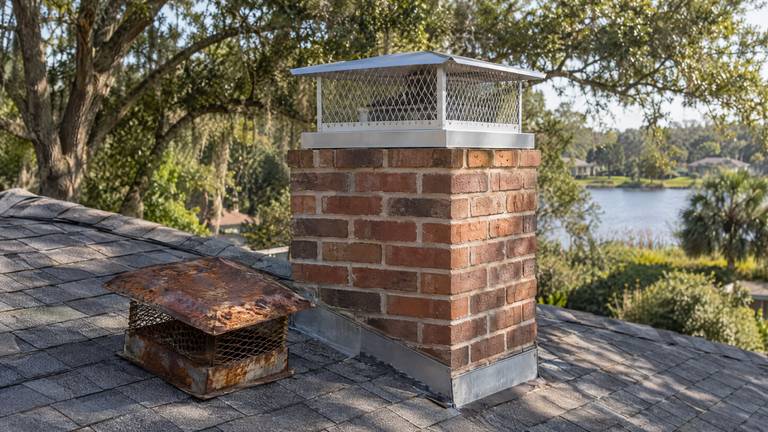
A chimney cap sits on top of the flue and does several jobs at once. Its lid turns rain away from the opening, its sides keep leaves and nesting material out, and its screen stops animals from climbing in. On a wood-burning fireplace, the same screen can catch embers before they reach the roof.
None of those jobs should block the exhaust. A cap that restricts the opening can slow the draft and send smoke back toward the fireplace. We choose each cap with both halves in mind, what it keeps out and what it has to let through.
Cap, crown or chase cover
Three different parts get called the chimney cover. The cap is the metal fitting over a flue opening. The crown is the concrete or mortar top that covers the brick around the flues. The chase cover is the metal sheet across the top of a framed enclosure around a factory-built chimney.
They fail differently and they are fixed differently. Before calling, there is no need to work out which one is the problem. Tell us what you can see from the yard, and the inspection pins down the part so the estimate covers the right repair.
Options priced in writing
Most chimneys have more than one reasonable cap choice. A single-flue cap in stainless steel, a copper version or one cap over several flues can all work, and they differ in look and price. Where a crown-mounted cap and single-flue caps both fit, we show you how each one handles the flues and the crown.
Every choice goes on the estimate with its own price and a plain note on what it changes. You pick, there are no hidden fees, and your pick is 10% off if you schedule it inside the 72-hour window after the inspection.
Checking your cap from the ground
You can learn a lot about a cap without climbing. From the yard, look for a lid that sits crooked, mesh that is bent or missing, rust streaks below the cap and debris or nesting material poking out of the sides.
After a strong storm, a quick look from the ground is worth doing. If anything looks different, call us instead of going up yourself. A loose cap can often be refastened before it falls, which keeps the job smaller.


