
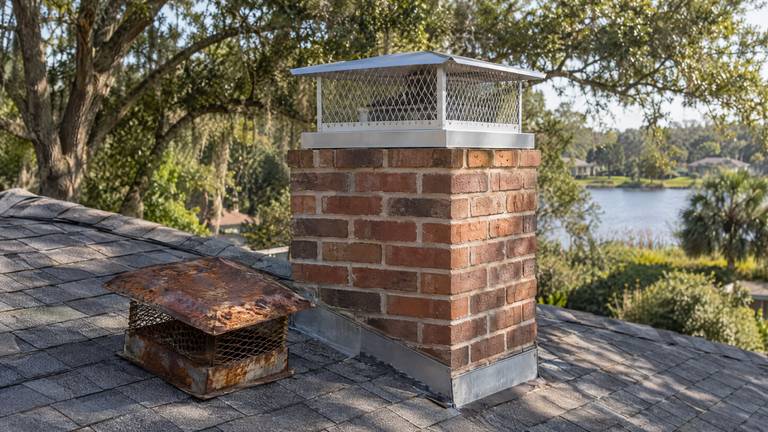
Treat the return of water as new information
A wet firebox after previous work is frustrating, but it does not by itself prove that the installed cap is defective. Start with the date of the work and the first recurrence. Explain whether the original symptom stopped for a time, changed location or continued without interruption. Those are different histories and should not be compressed into “the repair did not work.”
Keep the original estimate and invoice available. Look for the component named, the work actually completed and any limitation recorded at the visit. Replacing a missing rain cap and investigating all possible water paths are not automatically the same scope. A follow-up can then begin with what was agreed and what is now being observed.
Separate the opening from the surrounding construction
A rain cap, the top of a masonry chimney and the connection with the roof perform different jobs. Brick Industry Association Technical Note 19B illustrates crown drainage and chimney flashing as distinct construction details. A sound component in one location does not establish the condition of every adjoining part.
Rain coming down chimney openings may lead a homeowner to focus on the cap, but the inspection must follow the actual evidence. Ask which path is supported by the findings and what remains uncertain. A stain's location indoors should not be treated as a complete map of how moisture entered farther above.
The practical question is whether the proposed next job addresses a demonstrated defect. “Replace another part and see” is less useful than an explanation of the finding, the intended repair and how the remaining condition will be assessed.
Build a recurrence record without a roof inspection
Watch only from a normal, dry and accessible indoor position. Note the date, whether rain was occurring and where water became visible. Record whether it was a drip, a wet patch or material that stayed damp after the weather changed. You do not need a weather station or an exact measurement to provide useful context.
Avoid climbing, leaning out of windows or removing a cap to obtain a closer view. Do not run a hose over the roof to recreate the problem. A planned assessment should control where testing is appropriate and how the building is protected. An improvised test can add water without clarifying the original route.
If water is near electrical equipment, stay clear and arrange appropriate urgent help. A fire out of control or a carbon monoxide alarm comes first: get everyone out and call 911 before arranging a routine visit.
Questions that make a callback more useful
- Which part was replaced or repaired on the earlier visit, and which findings led to that work?
- Is the current observation of water in the firebox the same symptom, or has its location or timing changed?
- Was an adjoining roof or chimney component outside the original scope? Ask whether another trade must be involved before work is coordinated.
- Does the proposed follow-up include assessment only, a specific repair or both? Confirm this before authorizing additional work.
- What observation would indicate that the original concern remains unresolved afterward? Agree how to report a recurrence without performing a homeowner test.
Do not confuse drying with a completed repair
Damp material can make the result difficult to judge immediately. Ask the technician how the condition will be assessed after the entry point is addressed and what follow-up is appropriate. Do not set a universal drying deadline from an internet article; the extent and location of the affected material matter.
Painting over a mark or replacing a stained decorative surface can conceal evidence without correcting the path that allowed water in. Keep cosmetic work separate until the underlying issue has been assessed. This is a planning distinction, not a promise that every stain requires extensive construction.
Water dripping in the fireplace also calls for a discussion of use. Ask whether the appliance must remain unused while assessment or repairs are pending. A dry-looking surface on the next sunny day is not, by itself, permission to restart a system with an unresolved condition.
Compare the proposed scope with the earlier one
A second estimate should make its purpose understandable. It may concern a different component, additional work revealed by access, or correction to an earlier repair. Ask the provider to explain which applies. Keep descriptions specific enough that you can compare the two documents without relying on a broad label such as “chimney leak repair.”
Identify what will stay, what will change and which surrounding finishes are included. If roof work is involved, confirm the boundary between the chimney work and the adjoining roofing work. The homeowner should not be left to discover an uncovered connection after both appointments have ended.
Discuss how access will be arranged and whether another appointment is needed. The first conversation should establish the next useful step; it does not require you to select a replacement product before the condition has been assessed.
Make the appointment about the unresolved symptom
For a Seminole County home, the useful booking details are the property address, the affected fireplace, the previous work and the timing of the water's return. A nearby household's solution is not evidence that the same part has failed at your property. Use the repair history rather than a comparison with another chimney to guide the conversation.
Our inspection is free. Call (645) 465-4122 and explain that water has returned after earlier work, so the scope of the visit can be discussed. If the findings support chimney cap replacement, the proposed component and attachment should suit the system. If another part is responsible, the recommendation should say so.
Keep the final service information with the original paperwork. That gives a future visit an accurate history and avoids losing the distinction between the first repair, the recurrence and the later finding.
Sources
- BIA Technical Note 19B: Chimney crown and roof-flashing construction details.


