
Chimney Services
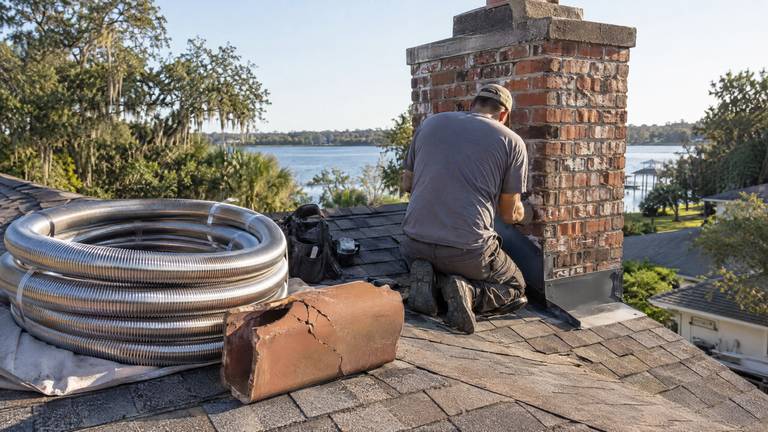
Chimney relining, step by step
When the inspection leads to relining, 10% comes off if you book within 72 hours.
When a liner needs insulation
Under UL 1777, insulation is required when the chimney does not meet the construction standard for its walls and clearances. One maker also notes that insulation helps the draft, keeps exhaust warmer and reduces condensation.
Insulation is part of the listed system, never an optional extra to drop when space is tight. We explain whether your chimney needs it and include the insulation, its fitting and its effect on liner size in the estimate. Where the passage is too tight for an insulated liner of the required size, we explain the alternatives rather than leaving the insulation out.
Airspace around an interior chimney
The building code keeps masonry chimneys separated from combustible framing by an airspace, which is larger for a chimney inside the house than for one built entirely outside it. That space protects the framing from heat passing through the masonry.
When the airspace is missing or cannot be confirmed, the liner plan changes, often to an insulated system. We explain what we could see in the attic or crawl space and how the plan responds to it. Where framing touches the masonry, the finding explains why that matters for the liner plan and what a correction would involve.
When a liner is not the answer
Relining restores a passage inside a sound chimney. It does not repair a leaning stack, a failed crown or loose exterior brick, and it is a different job from repairing the existing clay lining in place.
When the structure needs rebuilding or the existing lining only needs a local repair, we say so and explain that option instead. You get the recommendation that suits the chimney, not the one that sells the largest job. When more than one approach could work, each is priced separately so you can compare them.
Keeping the liner record
After relining, you receive the system name, the liner size and material, and the parts installed at the top and bottom. Keep this information with the appliance manual.
If the appliance is replaced later, that record lets the next inspection check quickly whether the liner suits the new model. It also helps any future repair use parts from the same listed system. The same record answers questions from a buyer or a home inspector if the house is sold.


