
Chimney Services
Inside a chimney waterproofing job in Winter Springs
Penetrating repellent versus a surface film
Clear masonry coatings fall into two families, according to Brick Industry Association Technical Note 6A. Film formers such as acrylics, urethanes and waxes leave a continuous layer on the surface. Penetrants such as silanes and siloxanes soak into the masonry, up to about 3/8 inch deep, and leave no surface film.
For an exterior chimney the difference is practical. A film can look glossy, trap moisture and eventually cloud or flake, while a penetrant changes how the pores take up water and leaves the surface looking much as it did. Our specialists use penetrating repellents on Winter Springs chimneys and name the product on the estimate.
Absorption, leaks and what a repellent changes
Water repellents are most effective at reducing the water that brick absorbs, Technical Note 6A notes, while most water that penetrates a wall gets in at separations and cracks between brick and mortar or at junctions with other materials. A repellent changes the first and does little for the second.
A straight estimate therefore separates the two. If your Winter Springs chimney is absorbing rain through sound brick, a repellent can help. If water is entering at a joint, the flashing or the crown, the repair for that entry point comes first and is priced on its own.
Applying the repellent from the bottom up
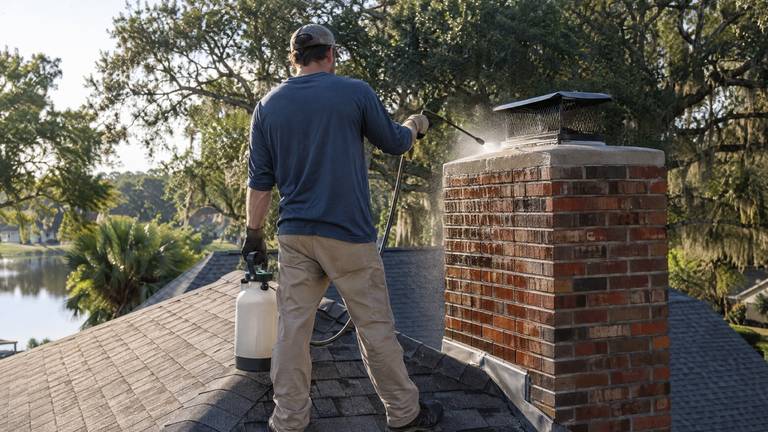
Vertical masonry is treated from the bottom up. Instructions for one water-based chimney repellent call for a low-pressure sprayer with a fan nozzle or a roller, with the surface flooded until runoff reaches six to eight inches below the spray pattern, followed by a second wet-on-wet pass within three to five minutes.
That saturating method is how the product gets deep enough into the masonry to work. It is slower than misting a light coat across the chimney, and it is the method our crew follows on Winter Springs homes. Each face is finished before the next one starts, and runs are brushed out so the treated surface dries evenly.
Wind-driven rain and a treated chimney
Sideways rain in a storm tests every face of a chimney. Technical Note 6A notes that a penetrating repellent's effectiveness under wind-driven rain is limited, and that it seldom stops water entering through wider cracks, which is one more reason cracks are repaired before treatment.
The Atlantic hurricane season runs from June 1 to November 30. An inspection booked early in the year gives time to repair and treat your Winter Springs chimney before the season, on a day dry enough for a proper application.


