
Our Services
Fitting gas logs, from burner to diagram
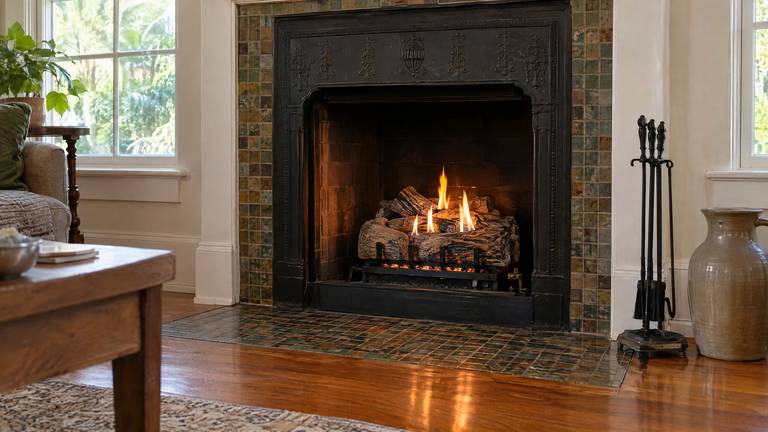
The fireplace is checked before our gas log specialists choose and fit a set.
Clean and check the fireplace before the logs go in
One maker's installation rules require the chimney flue, the damper and the firebox to be thoroughly cleaned of soot, ashes and loose paint before its burner goes into a solid-fuel-burning fireplace. The same manual notes that some fireplaces, especially older ones, may need repair before the appliance is installed.
Those parts are checked before quoting, and any cleaning or repair is listed on its own line. Doing that work first means the new set starts in a clean firebox with a clear flue above it, and nothing old is left to foul the burner. The cleaning also lets us see the firebox floor and walls clearly, which is where the burner and the logs will sit for years.
The gas line, and whose job it is
Our work is the appliance, meaning the burner, the logs, the controls and their fitting in the fireplace. New piping, a new stub into the firebox, meter work and propane tanks are outside that and go to a gas contractor, the utility or the propane supplier. Keeping the two apart means the quote you approve describes exactly what our technicians will do in your home.
The Florida fuel gas code calls for piping to be checked for leakage when gas is turned on, and for appliance connections to be checked before an appliance is put into operation. We coordinate with whoever handles the supply, and every connection we make is leak tested before the first fire.
Gas logs or a gas insert
A vented gas log set is classed as a decorative appliance, and its job is the look of a real fire in an open fireplace. A sealed gas insert is a heater with its own glass front and its own vent liners. The two are different installations with different prices.
Tell us whether you care most about the look of the fire or the heat it gives. If heat is the goal, we can price a gas fireplace insert alongside the log set so you can compare the two in writing. Both options start with the same free inspection, and each one is priced in writing so you can weigh them side by side.
Carbon monoxide and a gas log set
Any gas fire can make carbon monoxide if it burns badly, and the gas has no color or smell. The U.S. Consumer Product Safety Commission advises carbon monoxide alarms that run on batteries or have battery backup, placed on each floor of the home and outside the bedrooms. A set that is installed and serviced correctly burns cleanly, and an alarm is the backstop if something changes.
If an alarm goes off, everyone goes outside, and the call to 911 is made from there. One maker's manual also lists headache, dizziness and nausea as early signs and says to get fresh air and stop using the appliance at once.


