Our Services
Chimney rebuilding explained for Whites Landing
Questions every homeowner in Whites Landing should have answered before a chimney rebuild.
Keeping wood framing away from the masonry
Masonry chimneys need a gap between the brick and any combustible framing. The Florida Building Code, Residential, calls for an airspace of 2 inches or more when the chimney sits inside the house or within an exterior wall, and 1 inch or more when it stands entirely outside, including where it passes a soffit or cornice.
Where the chimney passes floors and ceilings, that space is closed with noncombustible fireblocking. A rebuild that reaches the attic or the roof framing restores those gaps and firestops, and anything we find touching the masonry is written up before the new brick goes in.
A rebuild is also a chance to find wood that was built too close years ago, such as blocking or a rafter resting against the brick, and we plan the correction with you.
A cricket on the high side of the roof
Water running down a roof piles up against the upper side of a chimney. A cricket, a small peaked diversion built behind the chimney, splits that flow and sends it around the sides instead of into the flashing.
The Florida Building Code, Residential, requires one where the chimney's dimension parallel to the ridge is more than 30 inches and the chimney does not meet the ridge. When a rebuild changes the chimney's footprint, or the roof around it is being redone, we check whether a cricket is needed and coordinate it with the flashing and your roofer.
A cricket is usually framed and covered by the roofer and then flashed to the chimney, so it goes into the schedule at the point where the new masonry is ready for its counterflashing.
Changing the chimney's look during a rebuild
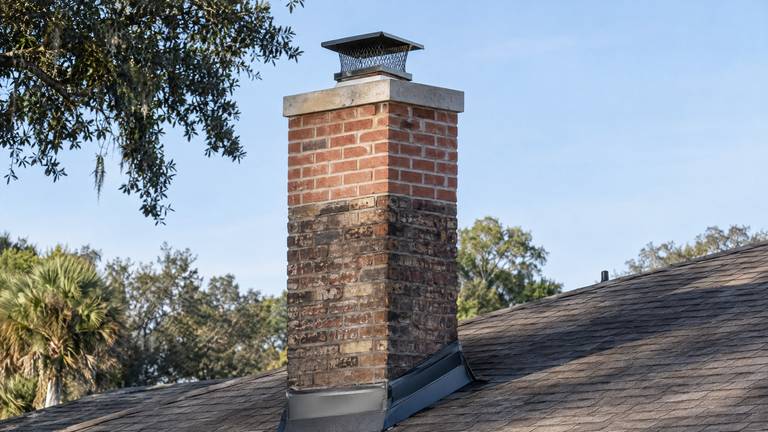
A rebuild is a chance to change how the top of the chimney looks, from brick color to a corbeled band or a different crown profile. Some changes are simple; others affect the flue, the height rule or the load on the masonry below.
We discuss the look you want before materials are ordered and check it against the code and the chimney's structure. Anything that changes the shape or the price appears on the estimate before work begins, so the finished chimney is the one you agreed to, inside and out.
Taller or heavier decorative tops can need extra support or a different crown, so we price those changes separately and explain what each one adds to the job.


