
Our Services
Crown repair details that matter
You learn what a coating can fix, and what only a rebuild can, before any work starts.
Reinforcement against shrinkage cracks
Concrete shrinks as it cures, and a crown on a chimney also moves with daily heating and cooling. The Brick Industry Association treats shrinkage in a cast-in-place cap as a certainty and recommends reinforcement to help control cracking, with extra in the overhang.
When we form a new crown, reinforcement goes in before the concrete, sized to the crown and kept clear of the edges. That will not make a crown crack-proof, but it keeps fine cracks from opening into gaps that let water through.
Signs a crown is letting water in
A failing crown rarely announces itself on the roof. More often the first signs are inside, as a damp patch on the ceiling or wall beside the chimney, water on the damper or a musty smell from the fireplace after rain.
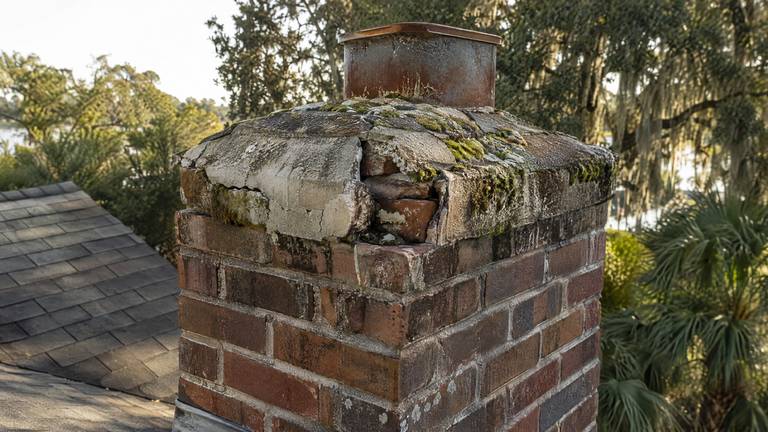
Outside, look for dark wet bands under the chimney top, white powdery deposits on the upper brick and flakes of brick or concrete in the gutter. We connect those signs to the crown or to another entry point before recommending any repair.
A crown flagged during a home sale
Crown cracks are a frequent item on home inspection reports, usually described in a sentence or two with a recommendation to have a chimney professional evaluate them. That leaves buyers and sellers unsure how big the job really is.
Our inspection tells you plainly whether the crown needs sealing, an edge repair or a rebuild, and you get a written price. After the work, you get a written description you can share with the other side of the sale.
Crowns with layers of old patches
Some crowns carry several generations of repairs, with mortar patches, caulk in the cracks and a coating or two on top. Each layer may have held for a while, but together they hide the condition of the crown underneath. Caulk smeared across cracks can also keep a new coating from gripping the surface.
Adding another patch rarely solves anything at that point. We check what is under the layers, and if the original crown has failed, we recommend removing it and forming a new one. You see why before you decide.


