
Chimney Repair
Finding and fixing the leak at its source
A free inspection comes first, and the repair is priced in writing before any work begins.
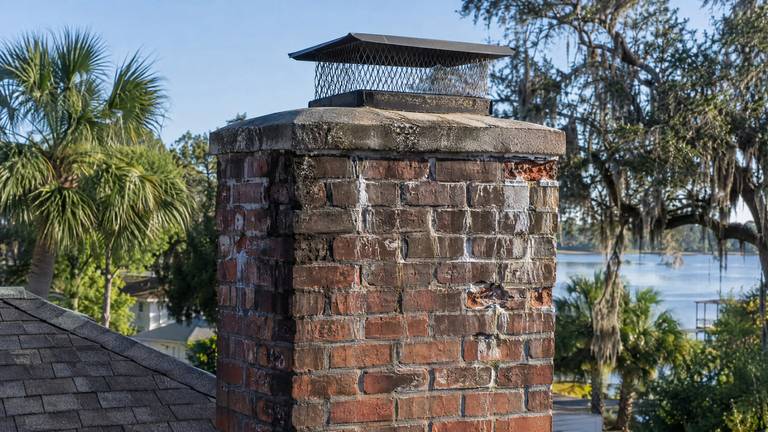
Brick faces that have flaked away
Brick that stays wet can lose its hard outer face. Once that face is gone, the softer core absorbs even more water and breaks down faster.
We cut out badly damaged units and replace them with brick matched as closely as we can in size and color. Repair comes before any water repellent, since a treatment cannot restore missing material. The estimate lists the number of faces affected and the work planned for each, so the scope is clear before we begin.
Tracing water in the attic
Where the attic can be entered safely, the framing around the chimney often shows the path water has taken. Stains on the decking, damp insulation and rust on nail tips mark where it has been running.
We compare those marks with the exterior conditions above them. That comparison narrows the entry point before any repair is proposed, and it shows you why the repair is aimed where it is. If the attic cannot be reached, the findings say so and rely on the exterior evidence.
Letting the masonry dry
A chimney that has been soaking for months holds water in its brick and mortar for some time after the leak is stopped. Stains may stay visible and some dampness may linger inside.
After the repair, you learn what to expect and which signs would mean water is still getting in. Fresh moisture after a storm deserves a call, while an old stain slowly fading does not. Keeping the two apart saves you from worrying over a repair that is working.
Roof water aimed at the chimney
A roof valley, an upper roof or a gutter can send concentrated water against the side of a chimney. That flow can overwhelm flashing that would handle ordinary rain.
Where the water on the roof comes from matters as much as where it goes in. When runoff is part of the cause, we explain the chimney side of the fix and name any roofing or gutter change that would reduce the flow.


