Our Work
The right steps for a chimney animal problem in Wagner
Chimney swifts and the law
Small birds called chimney swifts nest and roost inside chimneys, and the Migratory Bird Treaty Act protects them. The U.S. Fish and Wildlife Service is plain about what that means: it is against the law to harass, injure or kill a swift, and the same protection extends to its eggs and nest.
A swift nest is a small half-saucer of twigs glued with the bird's own saliva to the inside wall of the chimney. While it is active, it cannot be treated as debris. If swifts are nesting in a chimney in Wagner, we confirm it and plan the chimney work around them.
Finding how the animal got in
Most animals enter from the top: a missing cap, a torn screen, a cap knocked loose by wind, or a gap between a chase cover and the siding. Some find a gap at the crown or at a damaged flue top. A loose flashing gap or an opening in a framed chase can also let an animal into the space around the flue.
Our specialists check the whole top of the chimney during the free inspection and show you the entry point. The fix for that point is priced on its own line, whether it is a new cap, a screen repair or a separate chimney repair.
Other birds on or in the chimney
Swifts are not the only birds that use chimneys. Nests appear in the gaps of damaged caps, on crowns and inside open flues. The Migratory Bird Treaty Act prohibits taking protected migratory birds without authorization, and that protection covers many native species.
So we identify the bird before the nest is touched. If it is protected and active, the chimney work on your Wagner home waits. If the nest is empty or the species is not protected, our specialists clear it and close the entry. Birds nesting on top of a cap rather than inside the flue can usually be handled once the nest is empty, and the cap is then checked for gaps.
Leave the roof and the flue to us
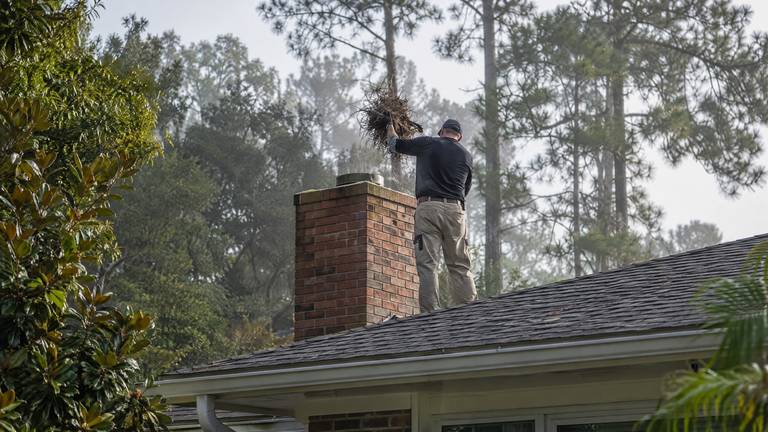
Looking down a chimney means climbing onto a roof, often a pitched one, and leaning over the top of the stack. Add a startled animal and that becomes a real fall risk. An animal cornered at the top of a flue may also bite or scratch, which is a health risk as well as a safety one.
Please stay on the ground and describe what you have heard instead. Our crew brings the ladders and tools for the job, checks the top of the chimney safely and tells you exactly what was found, from the entry point to the condition of the cap.


