
Our Services
The chimney crown, repaired from the top down
Written prices on every crown repair, from a family-owned local team, with no hidden fees.
Mortar washes and formed crowns
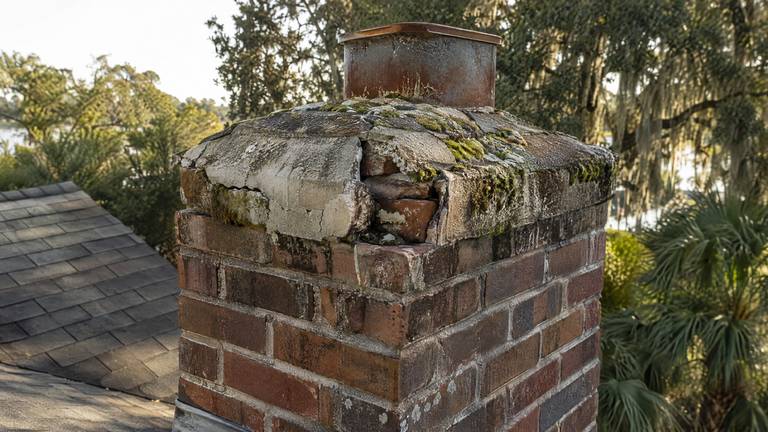
Many chimneys were finished with a layer of mortar troweled over the top course and sloped toward the edge. From the ground it looks like a crown, but it is thin, rarely reinforced and made from a mix meant for joints. The Brick Industry Association notes that mortar washes may not be as durable.
If the wash is still holding fast, a sealer and a yearly look may be enough for now. Once it is loose, cracked through or turning to sand, we recommend breaking it off and casting a proper crown with a thick edge, a projection past the brick and a drip underneath. Either way, you hear which kind of top your chimney has before any price.
Why feathered edges crack first
A crown that thins out to nothing at its edge looks neat when new, but the thin rim breaks first. The Brick Industry Association warns against feathering the cap to the edge, since it substantially reduces the thickness there and raises the potential for deterioration.
Broken edges and missing corners are a typical sign of a feathered crown. Patching the rim with more thin mortar repeats the problem. We rebuild the edge with real thickness, or replace the crown when the thin rim runs all the way around.
How a crown rebuild goes
A rebuild starts with protecting the roof and the flue openings. The failed crown is broken out down to sound masonry, loose top brick is reset, and a form is built to give the new crown its thickness, overhang and drip.
Reinforcement and bond breaks go in, the concrete is placed and shaped to slope, and the forms come off once it can hold its shape. We clean up the roof, show you the finished top and explain the curing time before the fireplace is used again.
Sun, heat and crown movement
A crown sits in full sun and heats and cools every day. Concrete, brick and the clay or metal liner all move by different amounts, and that repeated movement opens small cracks and pulls sealant away from the flues over time.
That is why a well-built crown includes bond breaks, flexible joints and reinforcement. When we repair a crown, we keep those details in place so the next few summers do not undo the work. It is also why rigid patches that cannot move with the crown tend to crack again along the same line.


