
Our Services
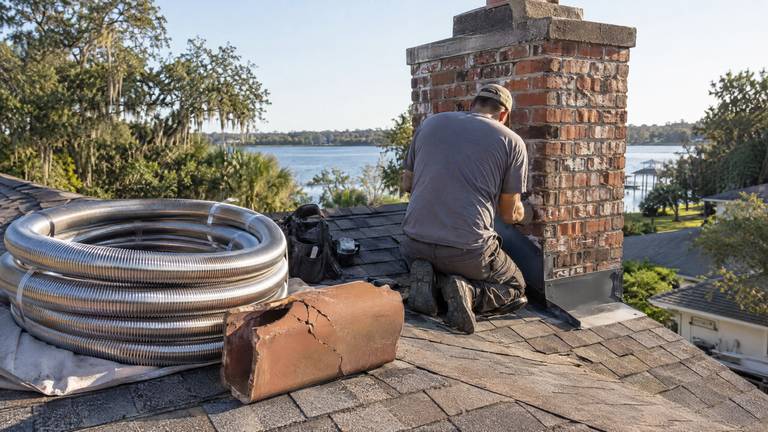
Steps in a chimney liner installation
Listed liner systems installed across Taintsville, starting with a free inspection from our family-owned team.
The appliance decides the liner
The fuel, the appliance model and the way it connects set the requirements for the liner. A liner that suits one appliance is not automatically suitable for another, even when both would fit the same chimney.
Before recommending a liner, we identify the appliance in use and any appliance you plan to install. If a change is coming, the liner is chosen for the new appliance, so you are not paying to reline twice. The appliance's installation manual is where those requirements are written, so we work from it rather than from rules of thumb.
A cap on top of the new liner
The listed system ends in a cap that keeps rain, debris and animals out of the liner. Where a spark arrestor screen is used on a masonry chimney, the building code sets how fine the mesh may be and requires it to be removable for cleaning.
We fit the cap that belongs to the listed system and fasten it to hold in wind. Its type and material are written in the estimate with the rest of the liner parts. A cap from outside the system is avoided, since it may not fit the liner or carry the same listing.
Clearing the flue before relining
Nests and debris in the flue have to be removed before a liner can pass. Some birds that nest in chimneys are protected under federal migratory bird law, which affects when an active nest may be disturbed.
We identify what is in the flue and plan the relining date around it. Once the liner and its cap are in place, animals no longer have an open path into the chimney. A nest found during the inspection does not end the project, it simply sets the timing.
Measuring the liner length
The liner has to reach from the appliance connection to the top of the chimney with a little extra for trimming. One maker's instructions measure from the bottom of the opening to the top and add about six inches.
We measure on site rather than estimating from the outside, since offsets and the connection point change the length. An accurate length keeps extra joints out of the flue and keeps the price stable. The measured length is written in the estimate next to the liner size.


