
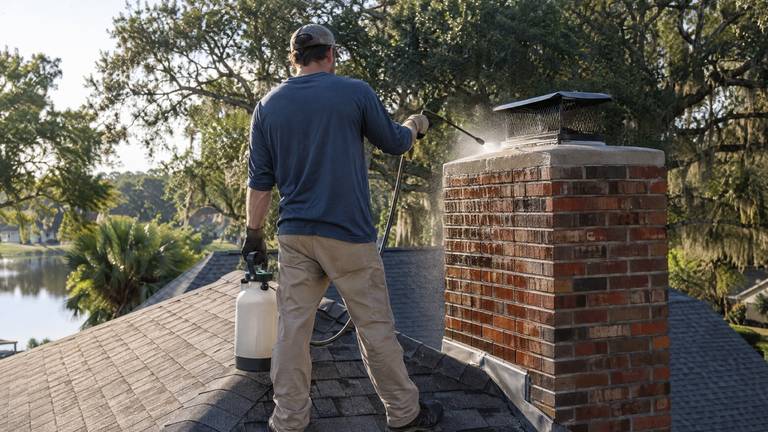
Our Process
How chimney waterproofing is done in Taintsville
Why a chimney repellent has to breathe
Water vapor transmission is the most important property to weigh when choosing a coating for exterior brick, according to Technical Note 6A. Coatings with low vapor transmission slow evaporation and can trap water inside the brickwork, which leads to clouding of the coating and deterioration of the brick itself.
Whatever moisture gets into a chimney has to be able to leave again, through the same face it came in by. That is why we choose repellents made to stay vapor permeable and avoid sealers that close the surface, even when a glossy finish is what a homeowner first pictures. You get the product information for whatever goes on your Taintsville chimney.
Repairs that come before any repellent
BIA guidance is direct about the order of work. The source of water penetration should be found and the necessary repairs completed before a water repellent is applied, and its list of repairs to finish first includes repointing cracked or disintegrated joints, replacing brick with spalled faces and replacing failed sealant.
The ChimneySaver instructions say the same thing in their own words, asking for structural cracks, faulty roofing, flashing, mortar joints and sealants to be repaired before application. On your Taintsville chimney those repairs are quoted as separate lines, the repellent comes last, and you can approve the repairs without committing to the treatment.
Waiting for new masonry and repairs to cure
Fresh masonry and fresh mortar need time before a repellent goes on. For best results, the maker of one water-based siloxane repellent wants new masonry cured for 28 days or more, and a wait of at least 72 hours after repairs or tuckpointing, before the product is applied.
When your Taintsville chimney needs both repairs and waterproofing, we schedule the treatment after the waiting period the product calls for, often as a second visit. Both steps appear on the written estimate, so you know the sequence before any work starts.
Letting the repairs prove themselves first
Patience is part of good waterproofing advice. After remedial repairs are completed and inspected, Technical Note 6A advises waiting several months to see whether a water repellent is still necessary, because moisture problems are often corrected by those repairs alone.
We are comfortable recommending that approach. If your Taintsville chimney stays dry after its repairs, you may not need a repellent at all, and if it still absorbs water, the treatment can be booked with better information in hand. Either way the decision is yours, and a follow-up look after the repairs is free.


