Our Process
How chimney animal removal works in Taintsville
Planning chimney work around the swift season
Swifts spend only part of the year here, and the U.S. Fish and Wildlife Service puts their arrival in March or April and their departure in August or September. The agency advises cleaning chimneys outside the nesting and roosting season, which for most of the country means between September or October and March or April.
If you hear swifts now, the practical answer is to wait. We book the cleaning and any capping in Taintsville after the birds have gone, and our specialists explain what can be done safely in the meantime.
A raccoon in the chimney
A raccoon in a masonry chimney usually means the top was open or the cap was damaged. Raccoons are one of the two primary wildlife sources of rabies in Florida, according to the state Department of Health, so no one in the household should try to reach, prod or trap one.
Keep the damper and glass doors shut and the room closed. Capture is a job for a wildlife professional you authorize, and our part is the chimney around it: finding the entry, clearing the debris the animal left and fitting a cap strong enough to keep the next one out.
Droppings and nest debris need careful cleanup
Bird and bat droppings build up on the smoke shelf and damper. The CDC explains that histoplasmosis comes from breathing in spores of a fungus that spreads in bird and bat droppings, which is why we advise against sweeping up dry droppings yourself.
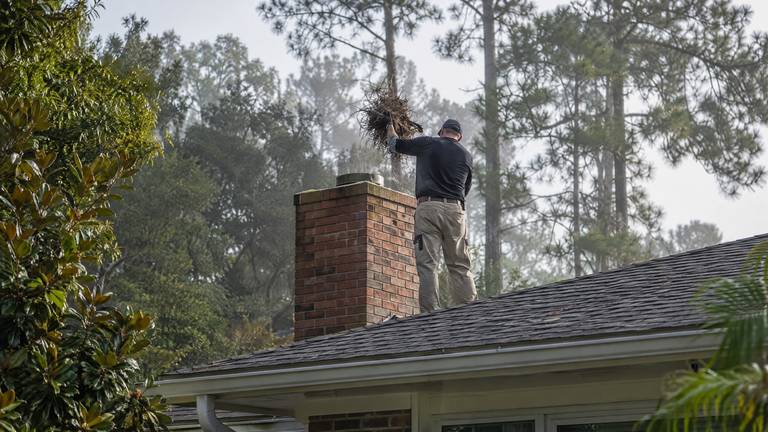
Once removal is complete and lawful, our crew clears the droppings and nest material from the reachable parts of the chimney while protecting the room below. The cleanup appears as its own line on the estimate for your Taintsville home. Our crew sets up drop cloths and covers the hearth before the material is brought down, so nothing is tracked through the house.
The damper as the last barrier
A closed damper keeps an animal in the flue from dropping into the firebox, but it does nothing to keep animals out of the chimney. A damper that no longer closes fully lets droppings, debris and sometimes the animal itself into the fireplace. Its job is to seal the firebox from the flue, and nesting material or droppings on the plate can stop it from closing.
Once the animal is out, the damper on your Taintsville chimney gets a look too. If it is warped or its hinge is worn, the repair goes on the estimate, so the room below stays protected while the new cap does the work at the top.


