Chimney Services
Chimney relining, step by step
The route, the insulation and both connections are settled before a liner is ordered.
Structural repairs come first
A liner does not hold a chimney together. Missing, loose or cracked masonry and open joints need repair before a liner is installed, as one maker's instructions state.
While the liner is being planned, the chimney structure is inspected, and you learn which repairs have to come first. Each repair is priced separately, so you can see the relining cost and the masonry cost on their own lines and plan them in the right order. Relining over a structural problem would leave the new system inside a chimney that still needs work, and the liner might have to come out again when that work is done.
Connecting the liner to the appliance
The bottom connection joins the liner to the appliance outlet through an adapter, a connector or an insert collar. The appliance's instructions and the code in force set the clearances and the parts that may be used there.
We plan this connection before the liner is ordered, since it can decide the liner size and the parts needed. Moving an appliance for access is planned with protection for the floor and the hearth. The connection is the part of the system you see every day, so it is finished neatly and left accessible for inspection.
Crown repairs before the top plate
Cracks in the crown are to be repaired before the liner is installed, according to one liner maker's instructions. The top plate and cap need a sound surface to seal against.
When the crown needs more than crack repair, we explain whether it should be rebuilt before relining. The crown work is priced on its own line, so you can see it next to the liner system and decide with both in view. A new top plate set on a failing crown would leave the new liner exposed to the same water the crown lets in.
How insulation is fitted
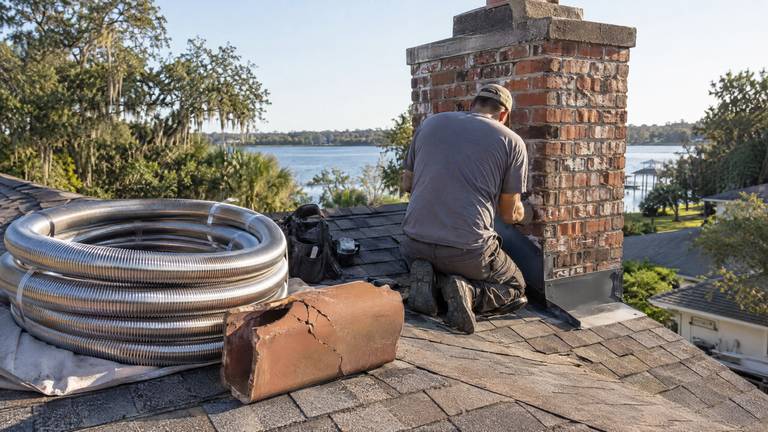
Insulation wrap is fitted around the liner before it goes into the flue. One maker's instructions describe a foil-faced blanket held with stainless steel mesh, stopped short of the crown so the liner can expand as it heats.
Fitted this way, the insulation stays in place during the pull and once installed. We check that the wrapped liner still passes the route test before the final installation. Insulation that bunches or slips during the pull can leave gaps, so the wrap is secured along its full length.


