
Chimney Services
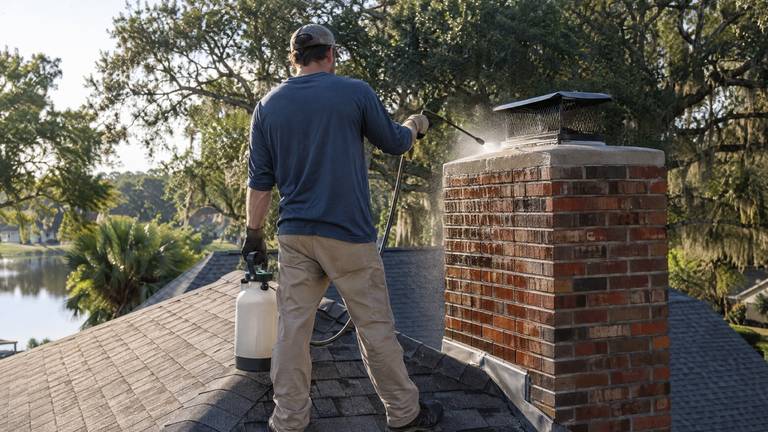
Inside a chimney waterproofing job in Slavia
Painted or glazed brick and repellents
Penetrating repellents need open pores to soak into. One siloxane repellent's maker rules out painted or glazed brick and tile, and Technical Note 6A warns that a penetrating coating typically will not work over an existing film-forming one.
If your chimney has been painted or coated, a standard repellent may be the wrong product. We explain what the existing finish allows, whether it would have to be removed first and what that involves, before recommending any treatment. Sometimes the sound answer is to repair the joints and the paint and leave the repellent out.
The crown needs its own protection
The crown is a flat, exposed cap of concrete or mortar, and it is handled differently from the brick walls below it. The company behind one chimney wall repellent makes a separate brushable elastomeric coating for crowns, and its data sheet describes it curing into a flexible waterproof membrane over the crown.
A wall repellent sprayed across a cracked crown will not close the cracks. When your Slavia chimney's crown needs attention, crown repair or sealing is priced as its own line next to the waterproofing, so each part of the top gets the treatment made for it.
Why chimneys are good candidates for a repellent
Most well-built brickwork does not need a clear water repellent under normal exposure, according to Technical Note 6A. The same note lists chimneys, along with parapets and barrier walls, as brickwork that is particularly vulnerable to water absorption and where a repellent can be useful.
A chimney stands above the roof with every face exposed and no eaves to shelter it. That is why a breathable repellent can earn its place on a sound chimney in Slavia, and why we still check the repairs first. Sound, absorbent brick gains the most from a treatment, while open joints need masonry work before any product.
Why we avoid film-forming sealers on chimneys
Film formers can bridge hairline cracks, Technical Note 6A acknowledges, but they also hold back evaporation through the brick face. When moisture gets behind them, the note warns of clouding and spalling, and it names acrylics, stearates, mineral gum waxes and urethanes among the film-forming products.
A chimney is exactly the kind of masonry that needs to dry out after rain, so a surface film is a poor trade on a chimney. We recommend penetrating, vapor-permeable repellents and explain the reason on the estimate.


