
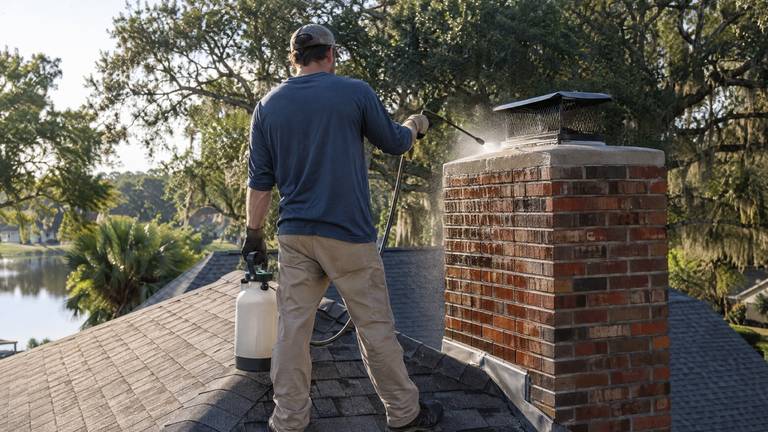
Our Process
How chimney waterproofing is done in Sanford
How a siloxane water repellent works
According to Technical Note 6A, siloxanes form a chemical bond with the silica and alumina in brick and mortar, and that bond is what makes the treated masonry repel water. SaverSystems' data sheet for its water-based ChimneySaver repellent describes a hydrophobic zone beneath the surface that keeps water molecules out while water vapor moves freely.
Because the reaction happens inside the pores, the surface texture and color are meant to stay much as they were. The same chemistry is why these products bond to glass that has not been protected, so masking nearby windows is part of the job on your Sanford home.
Protecting glass, paint, plants and shingles
Chemistry that bonds to brick can also mark what sits next to it. Technical Note 6A warns that coating chemicals can etch glass, damage paint and kill vegetation, and the ChimneySaver instructions ask for glossy surfaces, paint films, windows, plant life and asphalt-based materials to be protected from overspray and run-down.
On a shingle roof, the shingles sit right at the base of the chimney, so masking the roof is part of the job. Our crew covers windows, trim, plantings and the roof around your Sanford chimney before we start, and any accidental overspray is cleaned off right away with soap and water, as those instructions direct.
Applying a coating the way its maker intends
Experience with the specific coating matters, Technical Note 6A says, and it asks that coatings be applied according to the coating manufacturer's directions. Preparation, weather limits, coverage and the protection of nearby surfaces are all spelled out in those directions.
Chimney treatment is part of our regular masonry work, and we follow the product's own instructions on each of those points. Nothing is thinned, rushed or sprayed in the rain to finish early. Our workmanship warranty and our 100% satisfaction guarantee cover the finished treatment.
Reading dark and damp patches on the brick
After rain, a chimney dries unevenly. Faces that stay dark for days, a band of dampness under the crown or dark streaks below a joint all point to where water is getting in and how slowly the brick releases it.
Our specialists read those patterns during the free inspection. Evenly absorbent brick is a candidate for a repellent, while concentrated wet areas usually lead back to a joint, crack, crown or flashing that needs repair first. We show you the patterns on your Sanford chimney, so the recommendation makes sense to you as well as to us.


