
Chimney Services
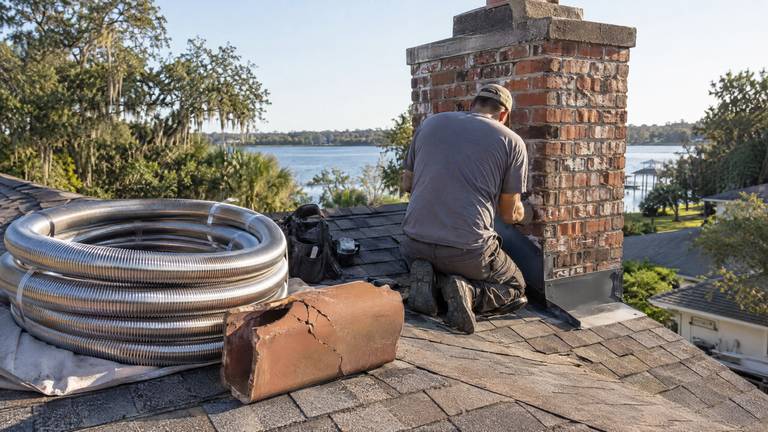
Relining the chimney from top to bottom
The route, the insulation and both connections are settled before a liner is ordered.
Sizing the liner to the appliance
A flue smaller than the connector it serves is not allowed under the Florida Building Code. One liner maker also warns against a liner far larger than the appliance outlet, since oversizing slows the exhaust and lets it cool.
We size the liner from the appliance outlet and its instructions, then check that the chosen size fits the passage with any required insulation. The sizing basis is written in the estimate, so the choice can be checked against the appliance manual. When the passage is too small for the required size with its insulation, we explain the options instead of fitting a smaller liner than the appliance calls for.
Tees and cleanout access
Where an appliance connects to a liner from the side, a tee joins the two, and a tee cap at the bottom gives access for cleaning. One maker's instructions describe removing soot through the tee branch.
We place the tee where both the connection and future cleaning can be reached. The cleaning method that suits the liner is explained at completion, so future sweeps do not damage the system. A tee that is hard to reach tends to be skipped at cleaning time, so access is part of the plan from the start.
How insulation is fitted
Insulation wrap is fitted around the liner before it goes into the flue. One maker's instructions describe a foil-faced blanket held with stainless steel mesh, stopped short of the crown so the liner can expand as it heats.
Fitted this way, the insulation stays in place during the pull and once installed. We check that the wrapped liner still passes the route test before the final installation. Insulation that bunches or slips during the pull can leave gaps, so the wrap is secured along its full length.
Keeping the liner record
After relining, you receive the system name, the liner size and material, and the parts installed at the top and bottom. Keep this information with the appliance manual.
If the appliance is replaced later, that record lets the next inspection check quickly whether the liner suits the new model. It also helps any future repair use parts from the same listed system. The same record answers questions from a buyer or a home inspector if the house is sold.


