
Our Services
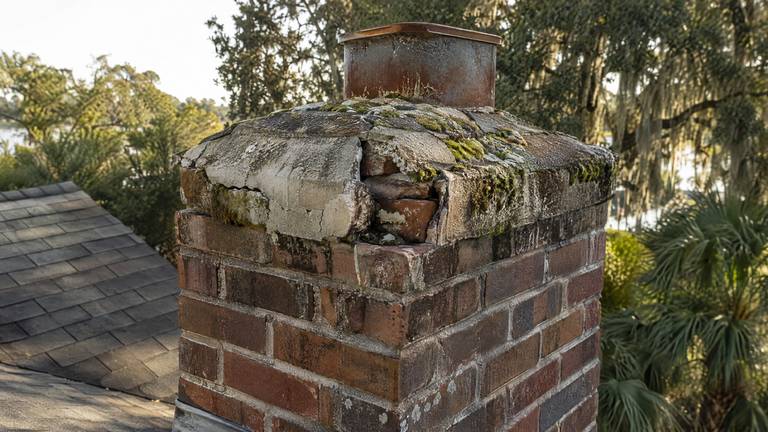
The chimney crown, repaired from the top down
The inspection costs nothing, and you choose between sealing and rebuilding with both options priced.
The crown and the cap are separate parts
Homeowners often use crown and cap for the same thing. The crown is masonry and covers the whole top of the chimney. The cap is a metal fitting over a single flue or a group of flues, and it keeps rain and animals out of the openings the crown leaves.
A new cap does not seal a cracked crown, and a new crown does not stop rain falling straight down an open flue. We check both from the roof and price them separately, which shows you what each fix costs.
Heat and rain limits for crown coatings
Coatings have weather rules. The same CrownCoat data sheet says surface and air temperature should not exceed 95 degrees Fahrenheit at application, and that the product should not go on a wet surface or when rain is expected within four hours unless the crown is protected.
On a Florida roof in summer, those limits matter. We schedule coatings for the cooler part of the day, check that the crown has dried out from the last storm and cover it if a shower threatens. A coating rushed onto a hot or damp crown wastes the product and your money.
Curing time after a new crown
New concrete gains strength slowly and needs to keep its moisture while it does. A crown that dries too fast in hot sun can crack at the surface before it ever sees a storm, which is why curing is part of the job and not an afterthought left to the weather.
The mix we pour comes with its own curing directions, and following them may mean shading the new crown or keeping it damp for a set time. We tell you how long to wait before lighting the fireplace, and whether a coating or cap goes on the same day or on a return visit.
White deposits on the upper brick
White, powdery staining near the top of a chimney is efflorescence. The Brick Industry Association explains that it forms when water carrying dissolved minerals reaches the surface of the masonry and evaporates, leaving the minerals behind. It is a sign of water traveling through the brick.
Washing the deposits off treats the symptom. We look above them for the source, which is often a cracked crown, an open joint at the flue or missing sealant, and we fix the water path before cleaning the face.


