Our Process
How chimney animal removal works in Midway
Capping a chimney that swifts have used
The Fish and Wildlife Service asks homeowners who want to support swifts to leave an unlined masonry chimney uncapped. The same guidance says a chimney that already has a metal lining should be capped, because metal is far too slippery for swifts to cling to and animals can be trapped inside.
We explain both paths for your Midway home and respect your choice. If you choose a cap, it goes on after the birds leave for the season, and our specialists size it for the flue so the chimney keeps drawing properly.
Who may remove nuisance wildlife in Florida
Florida's nuisance wildlife rule lets a property owner take nuisance wildlife, or authorize another person to do it on the owner's behalf, subject to the rule's exceptions. Protected species such as chimney swifts are handled under their own rules. The owner's authorization is what allows someone else to act on the property.
In practice, that means you decide who works on the animal side. Where capture is needed, we coordinate with a wildlife professional you authorize and handle the chimney work ourselves. Our specialists spell out which part of the job we do and which part we arrange.
A blocked flue after the animals leave
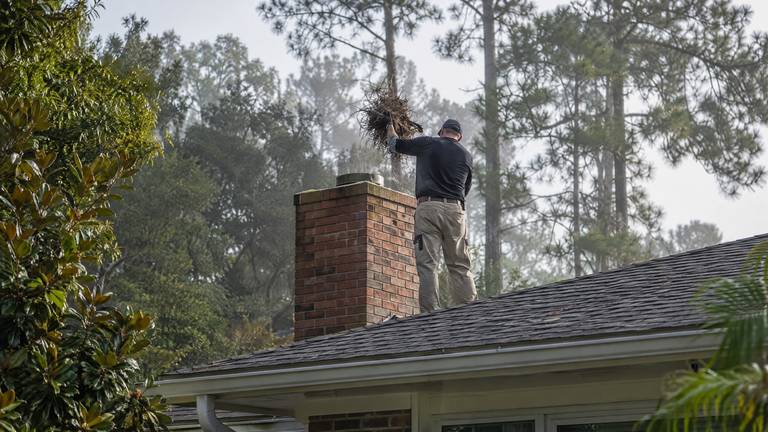
Nests, sticks and leaves can pack the flue or sit on the damper long after the animal is gone. A blocked passage can send smoke back into the room the next time the fireplace is used. Dry nest material in a flue is also fuel, which is one more reason the fireplace stays cold until the chimney is cleared.
After lawful removal, we clear the material and check that the flue is open from the firebox to the top. Our specialists also look for damage the nesting caused, such as a bent damper plate or a loosened liner section, and list anything that needs repair.
After a storm loosens the cap
Each year from June 1 to November 30, the Atlantic hurricane season brings wind that can loosen or tip a chimney cap. A cap that sits crooked or has blown off leaves the flue open to birds and animals within days, and one held by corroded fasteners is the likeliest to move.
After a storm, look at the chimney top from the yard. If the cap has moved, call (645) 465-4122. Our 24/7 emergency line takes calls about storm-damaged chimneys, and our team refits or replaces the cap on your Midway home before anything moves in.


