
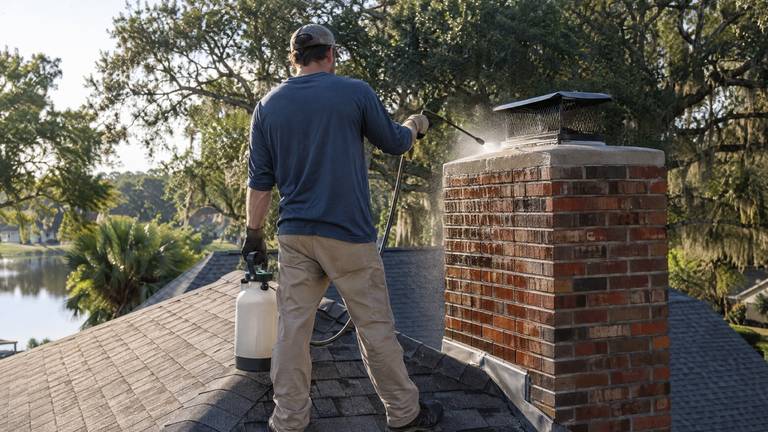
Our Process
Waterproofing a chimney in Markham, in detail
Why a chimney repellent has to breathe
Water vapor transmission is the most important property to weigh when choosing a coating for exterior brick, according to Technical Note 6A. Coatings with low vapor transmission slow evaporation and can trap water inside the brickwork, which leads to clouding of the coating and deterioration of the brick itself.
Whatever moisture gets into a chimney has to be able to leave again, through the same face it came in by. That is why we choose repellents made to stay vapor permeable and avoid sealers that close the surface, even when a glossy finish is what a homeowner first pictures. You get the product information for whatever goes on your Markham chimney.
White salt deposits and waterproofing
White efflorescence on brick is salt carried to the surface by water. BIA efflorescence guidance says the cause is usually moisture and that reducing water penetration comes before removing the deposits. Technical Note 6A adds that salts can become trapped under a film-forming coating or a low-permeability repellent and damage the brick.
So the water that carried the salts is traced first, and the deposits are removed before any treatment. Efflorescence that weathering leaves behind can usually be dry brushed away, according to the same guidance. Only then do we consider a breathable repellent for your chimney.
Chimneys with an unknown earlier treatment
Plenty of homeowners do not know whether their chimney was sealed before they bought the house. Technical Note 6A cautions that a coating incompatible with an existing treatment can harm durability and appearance, that reapplication can cause clouding, and that an existing coating sometimes has to stay in place until it wears off.
Signs of an earlier product include sheen, uneven darkening or water that beads on some faces and soaks into others. If the history is unclear, the test area answers the question before the whole chimney is treated.
Visibly dry brick on the day of treatment
Dew, a passing shower or an overflowing gutter can leave brick damp even under a clear sky. The ChimneySaver instructions ask for visibly dry surfaces and rules out wet or saturated masonry, while Technical Note 6A notes that some siloxanes and silanes tolerate slightly damp surfaces.
Our crew checks the brick on each face before starting and waits for wet areas to dry, following the instructions for the product being used. That patience is part of a treatment that works.


