
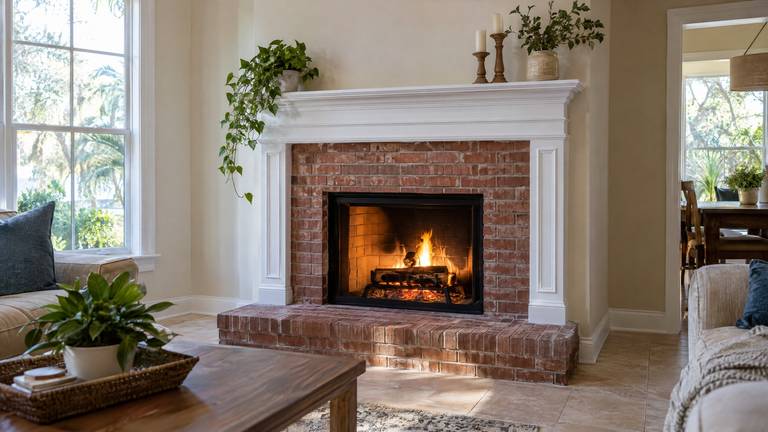
Fireplace Services
Wood insert installation from chimney top to hearth
Repairs are found and priced before the insert goes in, never after.
Repairs before the insert goes in
An insert covers most of the firebox, so the time to repair it is before installation. The manuals we follow call for the fireplace and chimney to be inspected for cracks, loose mortar and other damage, with repairs made first.
Our specialists list every repair the inspection finds and price each one on its own line. You decide which to approve, and we schedule the insert only after the fireplace is ready to receive it. Loose firebrick, open joints and a damaged smoke chamber are easier to repair while the old fireplace is empty.
One flue for one appliance
The insert manuals we reference say the insert must not connect to a flue that serves another appliance. Older houses sometimes run a furnace or a water heater into a second flue in the same chimney, and the connections are not always obvious from the room.
We trace what connects to the chimney before planning the liner. The insert gets its own flue, and anything else sharing the chimney is noted and explained in the estimate. When a second appliance shares the flue, the right answer depends on the chimney, and we explain the choices in writing.
Dry, seasoned wood
EPA advises burning only dry, split wood that has seasoned for at least six months, and checking it with a moisture meter. It also suggests keeping the woodpile outdoors, raised off the ground, with a cover over the top only.
Wet wood wastes heat, dirties the glass and leaves more deposits in the liner. We explain the moisture check at handover and suggest how to stack wood so it dries between deliveries. A covered stack in open air dries faster than wood packed into a closed shed.
What to use when lighting the insert
One insert manual says gasoline and other flammable liquids must never be used to start or freshen a fire. Small dry kindling and newspaper do the job without the risk.
We light the first fire with you, using the method your model's manual describes. You see how the air settings change as the fire catches and how to keep it burning cleanly from the start. The same match-and-kindling method works for every fire after the first.


