
Chimney Services
Crown repair on Longwood chimneys, step by step
Sealed or rebuilt, each crown carries our workmanship warranty, plus a 100% satisfaction guarantee.
What the crown does at the top of the chimney
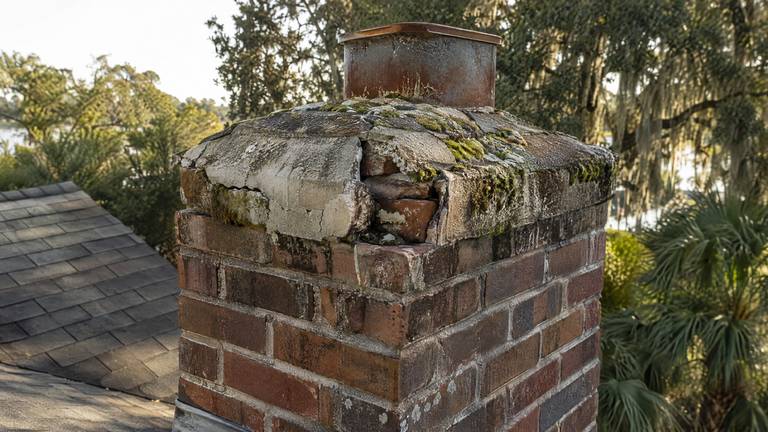
Around the flues at the top of a masonry chimney sits a slab of concrete or mortar, the crown. It meets the rain first and should throw it clear of the brick. In Florida Building Code terms it is a cap of concrete, metal or stone, pitched to shed water, edged with a drip and kept apart from each flue liner by a caulked bond break.
Once the crown cracks or loses its slope, water gets into the upper brick, reaches the flue joints and eventually shows up at the fireplace or on a ceiling. Repairing it early usually keeps the job to the crown alone.
Sealant at the flue joint
Around each flue liner, the crown is finished with a bead of flexible sealant in place of rigid mortar, and that bead wears out long before the concrete does. The Brick Industry Association recommends a good grade of polysulfide, butyl or silicone rubber sealant, installed with proper priming and backing, and advises against oil-based sealants.
A hardened, cracked or missing bead lets water run straight down the outside of the liner. Resealing that joint is a small job when the crown itself is sound, and we check it on every crown we look at.
Leaks at the roof line and leaks at the crown
Water that shows up on a ceiling beside the chimney can come from the crown, but it can also come from the flashing where the chimney passes through the roof. The two leak paths look alike from inside the house.
One visit covers all three, the crown, the joints at each flue and the flashing, and you hear which is to blame. When two are failing, each is priced separately, so a crown is never sold to cure a flashing leak.
Protecting the roof during crown work
Breaking out an old crown sends dust and concrete toward the roof and gutters. We cover the roofing around the chimney, protect the flue openings from debris and lower the old material instead of dropping it. Any cap removed for the work is stored where it cannot be damaged or blow away.
At the end of the day the roof is swept, the gutters near the chimney are cleared and the flues are checked for anything that fell in. If we notice roofing damage near the chimney, we mention it before we leave.


