
Our Services
Chimney repairs for homes in Longwood
A free inspection comes first, then a written estimate that lists every repair and the reason for it.
Finding the cause before choosing a repair
What you see on a chimney is often the result rather than the cause. Brick that flakes near the top may trace back to a crown that sheds water onto it, and a stain inside can start at flashing several feet away. The Brick Industry Association advises finding where moisture comes from before repairing masonry, then correcting both the cause and the damage it left.
Every chimney in Longwood gets that same order, from the free inspection through to a written estimate naming the cause beside each repair.
Why the screen size matters
The mesh around a cap keeps animals out and catches sparks, and its size is not arbitrary. Where a spark screen is fitted, the code sets openings small enough to stop anything wider than half an inch, yet open enough to pass anything under three-eighths of an inch, and it asks that the screen or cap come off for cleaning. Mesh that is too fine clogs with soot, while torn mesh lets nesting material in.
On repair visits in Longwood, the screen is checked along with the cap and replaced when it no longer does either job.
How much of the chimney has to come down
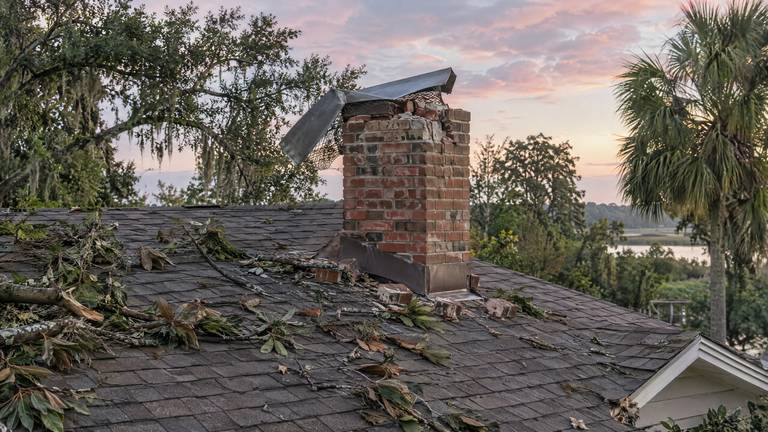
A chimney that has failed at the top does not always need rebuilding from the roof line. Where the brick below is sound, the damaged courses can be taken down to firm masonry and relaid, with a new crown on top. Where the damage runs deeper, or the stack has moved, a larger rebuild is the honest answer. What the brick shows decides the extent, whatever the age of the house.
Our masonry specialists in Longwood mark the line where sound brick begins, so you can see why the price covers what it does.
Settling at the base of the chimney
Under the building code, the footing under a masonry chimney must be concrete or solid masonry with a thickness of at least 12 inches, and it must project at least 6 inches out from the face of the wall it supports on all sides. When a chimney settles unevenly, the signs appear higher up, as a widening gap at the wall, cracks that step through the brick or a top that no longer sits plumb. Movement like that is investigated before any surface is patched.
Whatever the base of the chimney shows in Longwood is explained plainly, including when the question belongs with a structural engineer.


