
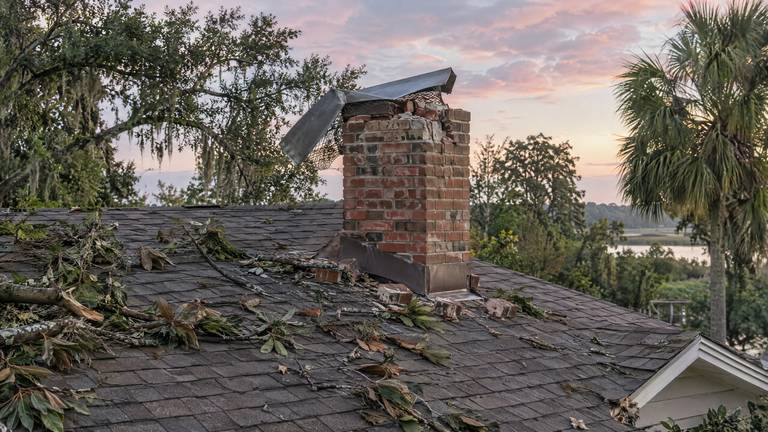
Start with safe access to the property
Do not climb onto a wet or damaged roof to inspect the chimney. Fallen branches, loose masonry and displaced metal can create hazards beyond the visible defect. Keep people away from the area beneath unstable material and follow instructions from emergency responders where the property has broader damage.
Hurricane chimney repair begins after the immediate hazard is addressed. If there is an uncontrolled fire or a carbon monoxide alarm, leave the building and call 911 from outside. Our urgent service line is available around the clock, but repair access and appointment timing depend on actual conditions.
Inspect the top components that are actually installed
A chimney cap blown off in wind leaves a different repair from a chase cover blown off a framed enclosure. A masonry chimney may instead have damage to its crown or exposed tile. We identify the system and examine the components it uses, rather than assuming every chimney has the same top assembly.
Retained supports and attachment points matter when replacing a displaced part. A new cap or cover needs sound, compatible mounting conditions. If the storm damaged those supports, replacing only the visible metal piece can leave an incomplete repair.
Follow water entry beyond the first stain
Wind damaged chimney repair may involve the roof junction as well as the top. Flashing can be disturbed, adjoining roof material can be damaged and water can travel before appearing inside. The location of an indoor stain is useful information but does not automatically identify the entry point.
We assess the chimney portion and explain any roofing coordination needed. Temporary weather protection, when appropriate and safely possible, is distinct from a permanent repair. It should not be treated as confirmation that the underlying damage has been resolved.
Assess masonry and the passage before use
Chimney damage after hurricane conditions can include cracked, displaced or fallen masonry. A stack that looks mostly intact may still need assessment where an impact or movement occurred. Keep the fireplace unused until the relevant structure and exhaust path have been evaluated.
Hurricane chimney damage repair may therefore involve more than one trade or repair family. Chimney masonry repair addresses the structural material, while lining and appliance concerns have their own assessment. Replacing a top cover does not establish that an impacted flue is sound.
Keep useful records without taking risks
Photographs from a safe ground-level position can document what you noticed and help explain the concern when booking. Keep any previous chimney or roof service information available. Do not move unstable material solely to obtain a clearer picture.
The repair estimate distinguishes observed damage from causes or concealed conditions that still need assessment. If another contractor is involved, tell us so access and the work sequence can be coordinated.
Arrange the permanent repair
Call (645) 465-4122 for a free inspection in Seminole County and describe missing parts, falling material or active water entry. We explain availability and prioritize the findings according to the condition. The written proposal identifies the components being repaired and any work outside that scope.
After completion, follow the instructions for curing and fireplace use. Monitor previously damp interior areas before restoring finishes over them. The goal is to repair the affected chimney assembly and its entry points, not merely make the outside look unchanged after the storm.
