
What's Included
Chimney flashing repair in Lock Arbor, detail by detail
The uphill side where water gathers
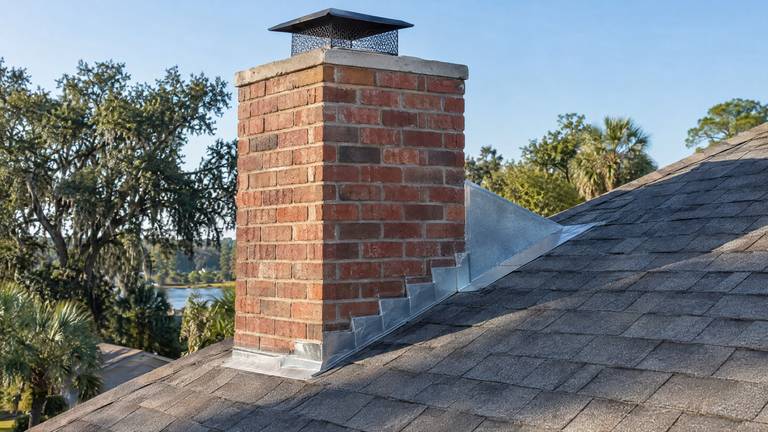
Water running down the roof hits the uphill face of the chimney full on. On a narrow chimney, a back pan of flashing turns it aside. A wider chimney needs a cricket, also called a saddle, and section R903.2.2 of the Florida residential code requires one on the ridge side whenever the chimney is more than 30 inches across, measured perpendicular to the slope, so the flow divides around the chimney rather than pooling behind it.
Back flashing and whether a cricket is present get checked too, and you learn whether the chimney width calls for one. That check is part of the free inspection in Lock Arbor.
What the attic shows
If there is attic access near the chimney, it is one of the most useful places to look. Darkened roof decking, stained rafters or wet insulation beside the chimney show where water has been getting past the flashing and how far it has spread. Dry wood there after heavy rain is useful evidence too.
With your permission we check the attic during the free inspection in Lock Arbor. Damaged decking or framing is noted separately, so you know what is chimney work and what is roof or interior repair.
When water comes through the brick above
Flashing only protects the joint it covers. Brick and mortar above the roofline absorb rain, and water can travel down inside the masonry. That is why the Brick Industry Association carries counter flashing through the wall to collect water draining down the back of the brickwork. Without that, sound flashing can look guilty.
If the masonry is the real source, chimney waterproofing or masonry work may be the right fix. You get that honest answer free in Lock Arbor from our family-owned team.
Solar panels near the chimney
If solar panels are planned or already installed near the chimney, access to the flashing matters. Panels mounted tight against the chimney can make future flashing work harder and can hide the roof around it. It is worth settling chimney repairs before the racking goes on.
We can inspect the flashing ahead of a solar installation and talk through spacing with your installer. Our family-owned team offers that first look free for homes in Lock Arbor.
Checking the work after the next rain
New flashing stops water entering, but a ceiling stain does not vanish on its own. After the repair, watch the stained area through the next few heavy rains. A dry stain that stays the same size is old evidence. A stain that darkens or spreads means water is still getting in somewhere.
If that happens, call us. Our 100% satisfaction guarantee means we come back to your Lock Arbor home and find out why.


