
Our Services
How we inspect a chimney from top to bottom
When the schedule has an opening, the Lock Arbor inspection can happen the same day.
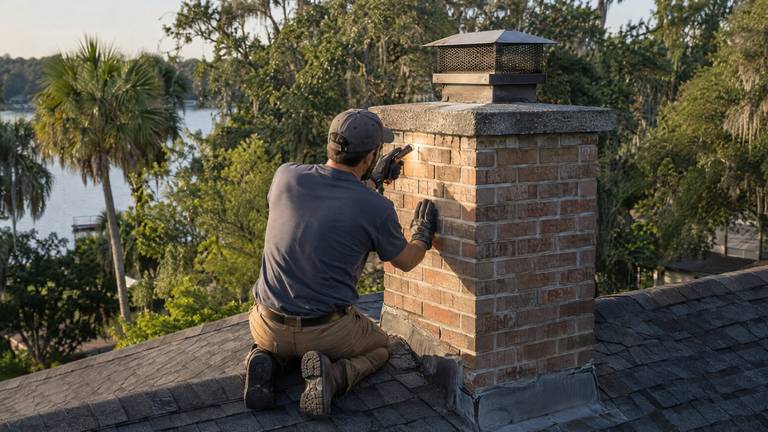
Cap, screen and how the cap is fastened
A chimney cap keeps rain from falling straight into the flue and gives birds and animals a barrier. We check that the cap is present, fastened securely, free of heavy rust and clear of leaves or debris that could restrict the flow of exhaust.
The screen matters as much as the lid. A torn mesh lets animals in, and a clogged one holds back smoke. We also look at how the cap is attached, since a cap resting loosely on the tile can lift in a storm. If the cap should be replaced, we explain the size and material that suit the flue and price the replacement on its own line.
Looking down the flue from the top
From the chimney top, the visible part of the flue lining says a great deal about the system. We look for cracked or shifted tile, gaps at the joints, heavy deposits and anything lodged in the passage.
A lining that is continuous and intact keeps heat and exhaust inside the flue and away from the masonry around it. Where we cannot see far enough to judge a section, we say so. We then explain what further access would show before recommending any repair to the lining, so you are never asked to pay for work based on a guess about a part nobody could see.
The smoke chamber above the damper
Between the damper and the flue sits the smoke chamber, a sloped space that guides smoke into the lining. Rough or stepped walls, open joints and heavy deposits here affect both the draft and the safety of the fireplace.
We inspect the chamber from the fireplace opening with the damper open and a strong light. Corbeled brick left exposed, cracks through the parging and gaps where the chamber meets the flue are each noted. If the surface needs parging or cleaning, we explain why and include the work in a written estimate, separate from the free inspection.
Getting the house ready for the visit
Keep the fireplace unused for a day before the visit so the firebox is cool. Clear a path to the fireplace and move anything fragile from the mantel and hearth.
If you have the owner's manual, earlier reports or receipts for chimney work, set them out. Tell us about locked gates, pets and roof access when you book. There is no need to take anything apart or to clean the fireplace first, since the ash and deposits help show how it has been used.


