
Our Services
Crown repair details that matter
Coating, edge repair or a new crown, and how our specialists decide between them.
Reinforcement against shrinkage cracks
Concrete shrinks as it cures, and a crown on a chimney also moves with daily heating and cooling. The Brick Industry Association treats shrinkage in a cast-in-place cap as a certainty and recommends reinforcement to help control cracking, with extra in the overhang.
When we form a new crown, reinforcement goes in before the concrete, sized to the crown and kept clear of the edges. That will not make a crown crack-proof, but it keeps fine cracks from opening into gaps that let water through.
Loose brick under the crown
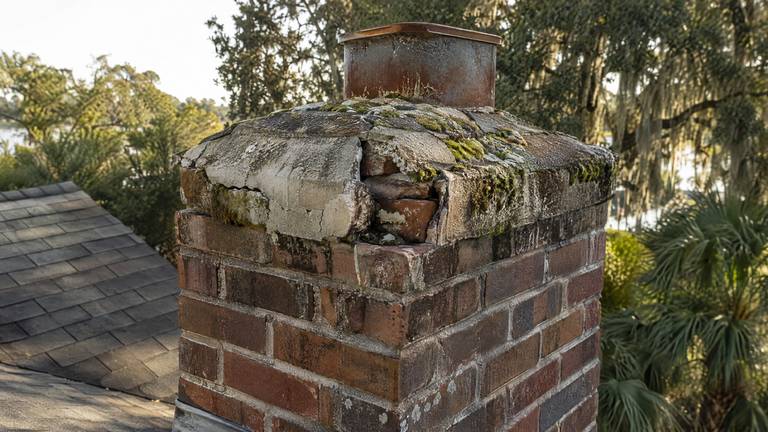
Water that gets past a failing crown soaks the top courses of brick first. Mortar joints soften, bricks loosen and faces begin to flake. A new crown set on loose brick will crack along the same lines as the old one.
We check the upper courses at every crown inspection. Where they are sound, the crown work goes ahead on its own. Where they are loose, we reset or replace them first and list that masonry work separately on the estimate.
Removing and refitting a cap during crown work
A crown-mounted cap or a bolt-on cap often has to come off before the crown can be repaired. Some come off cleanly and can go back on. Others are rusted, bent or fastened with screws that will not hold in the new surface.
Before the work, you find out whether the existing cap can be reused. If it cannot, the replacement is priced on its own line, and the new crown is shaped so a crown-mounted cap will seat flat with its fasteners well back from the edge.
A yearly look at the chimney top
Under NFPA 211, the national standard for chimneys and fireplaces, a chimney should get an inspection every year. The crown gains a lot from that check, because small cracks are simple to seal and large ones are not.
A yearly look catches hardened sealant, new hairline cracks and edge damage while they are still minor. We can combine it with a sweep or a cap check on the same visit, each priced separately. A crack that has grown between two yearly visits tells us more than a single look ever could.


