Our Services
Steps in a chimney liner installation
Local specialists and upfront prices on every relining in Lake Mary, backed by our 100% satisfaction guarantee.
Why masonry chimneys are lined
Masonry chimneys must be lined under the Florida Building Code, and the lining must suit the appliance it serves under that appliance's listing and instructions. The lining keeps heat, exhaust and condensation inside the flue and away from the brick and mortar.
Clay tile, listed metal liner systems and certain factory-built units are among the lining options the code recognizes. We explain which option applies to your chimney and why, rather than treating every flue as a candidate for the same product. The match between lining and appliance is the first thing we confirm, because every other part of the plan depends on it.
The top plate and how it is fastened
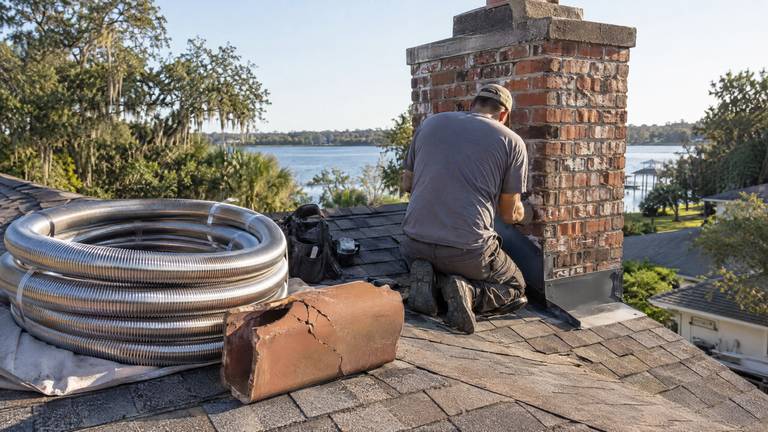
The top plate sits on the crown and carries the weight of the liner. One maker's instructions call for it to be fastened with silicone or masonry screws and for the liner to be cut flush at the top.
A top plate on a cracked crown or loose tile will not seal. We make sure the surface under it is sound, fasten the plate to the instructions and seal it so rain runs off rather than into the chimney. The seal between plate and crown is what keeps rain from running down between the liner and the old flue walls.
Old tiles in the way of a new liner
Damaged clay tile that blocks the route may need to be broken out so the new liner can pass. One maker describes chipping damaged tile flush and keeping the broken pieces out of the flue, while sound tile that only protrudes may stay.
We explain in advance whether tile removal is expected, how debris will be collected and how the room will be protected. Tile removal appears in the estimate when the route test shows it is needed. Only the tile that has to go is removed, and sound tile left in place keeps its role around the new liner.
Clearing the flue before relining
Nests and debris in the flue have to be removed before a liner can pass. Some birds that nest in chimneys are protected under federal migratory bird law, which affects when an active nest may be disturbed.
We identify what is in the flue and plan the relining date around it. Once the liner and its cap are in place, animals no longer have an open path into the chimney. A nest found during the inspection does not end the project, it simply sets the timing.


