
Our Process
Waterproofing a chimney in Lake Mary, in detail
The weather window for a water repellent
Repellents have application limits, and the product's maker sets them. One chimney repellent's data sheet asks for surface and air temperatures between 40 and 100 degrees F for three hours after application, no application to wet or saturated surfaces, and no application when rain is expected within six hours unless the surface is protected.
Our crew plans your Lake Mary job around those limits. If rain is due or the brick is still wet from a morning shower, the application moves to a better day, since a repellent applied outside its conditions may not perform as its maker intends.
Applying the repellent from the bottom up
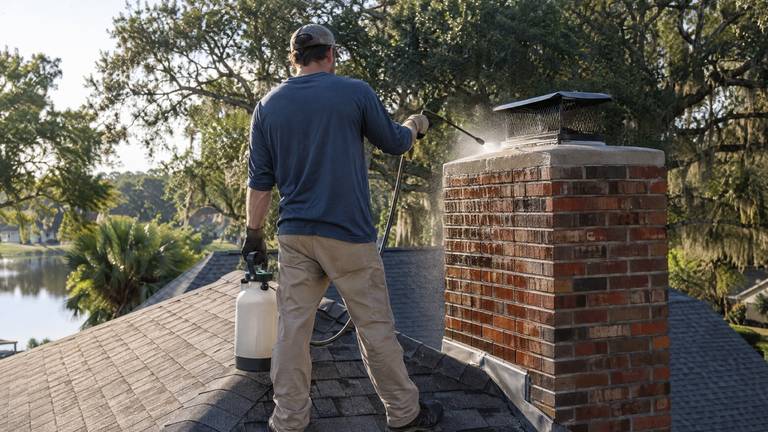
Vertical masonry is treated from the bottom up. Instructions for one water-based chimney repellent call for a low-pressure sprayer with a fan nozzle or a roller, with the surface flooded until runoff reaches six to eight inches below the spray pattern, followed by a second wet-on-wet pass within three to five minutes.
That saturating method is how the product gets deep enough into the masonry to work. It is slower than misting a light coat across the chimney, and it is the method our crew follows on Lake Mary homes. Each face is finished before the next one starts, and runs are brushed out so the treated surface dries evenly.
Stucco chimneys and water repellent
Portland cement stucco is porous and can take a penetrating repellent. The ChimneySaver data sheet lists portland cement stucco among its uses and gives it a coverage range of its own, which reflects how differently stucco absorbs compared with brick.
Cracks in stucco are a repair first. Our specialists check the finish on a stucco chimney in Lake Mary for cracks, soft spots and separation at the trim, and quote stucco repair separately from any repellent. A sound but thirsty stucco finish can then be treated, with a test area first, as on any surface.
Caring for a treated chimney
A treated surface still needs occasional care. One repellent's data sheet recommends removing staining contaminants promptly and notes that occasional cleaning with mild detergent and water generally restores the treated surface's appearance.
Beyond cleaning, keep an eye on the parts a repellent does not protect: the cap, the crown, the flashing and the joints. A look after a big storm, and a call if something has moved, keeps small problems small. When the next treatment is due, we check the surface first instead of assuming it needs another coat.


