
Our Services
How our craftsmen repair a hearth
The inspection is free, and you choose the finish after seeing each option priced in writing.
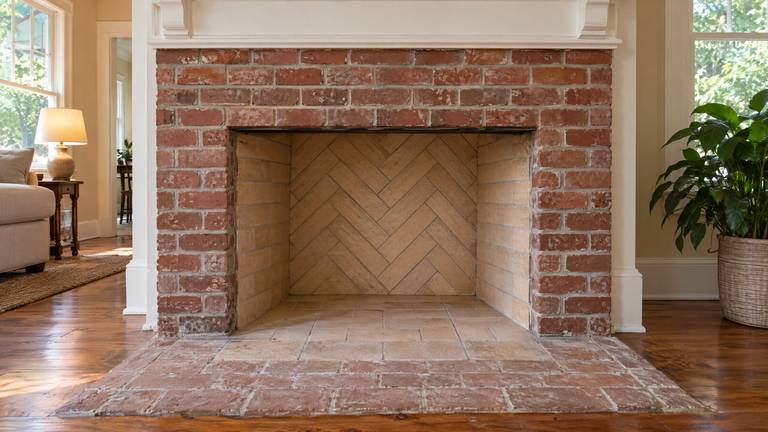
Hearth and hearth extension
People say hearth for two different parts. The hearth proper is the solid base the fire sits on inside the firebox, and the Florida residential code asks for it to be at least 4 inches thick on a masonry fireplace. The hearth extension is the noncombustible floor that projects into the room in front of the opening.
Most visible damage sits in the extension, because that is the part people walk on, set things on and look at. The inspection tells you which part is affected, since the firebox floor is repaired as firebox work while the extension has its own size, thickness and support rules. Naming the right part at the start keeps the quote accurate.
What holds the hearth up
A masonry hearth extension needs support that will not burn and will not sag. The Florida residential code wants noncombustible supports under it and enough reinforcement for its own weight and any imposed loads. Brick industry guidance describes a reinforced slab where the hearth cantilevers from the fireplace wall to the floor framing, or a base filled solid with masonry.
When cracks or movement suggest the support has changed, we look at how the hearth is carried wherever the structure can be seen. If the base needs work, that becomes the first line of the repair, ahead of any finish. Finding the support problem first is what keeps the new finish from cracking along the old lines.
Curing before the next fire
Mortar, setting beds, fillers and grout all need time to cure before they meet heat. The time depends on the product and the conditions in the room, and each maker states it. Lighting a fire on fresh work drives moisture out too fast and can crack a repair that would otherwise have lasted.
You learn when the hearth can be walked on, when it can take furniture or tools and when the fireplace can be lit again. Those can be different days, so plan any gathering around the last of them. If a fire is planned for a particular evening, tell us when you book so the materials can be chosen with that date in mind.
Smoke stains on a brick hearth
Smoke leaves dark stains on brick in front of the opening. Brick industry guidance says scrubbing with scouring powder and a stiff bristle brush is often effective on smoke, and it warns that some cleaning solutions react with minerals in brick and can cause or worsen stains.
Any cleaner is therefore tried on a small, hidden area first. We clean brick hearths as part of a repair, and stone and tile follow their own makers' care instructions, since cleaners safe on brick can mark polished stone. Stubborn stains on stone or glazed tile are handled with products made for that material, tested first on a hidden area.


