Our Process
How chimney animal removal works in Lake Charm
Planning chimney work around the swift season
Swifts spend only part of the year here, and the U.S. Fish and Wildlife Service puts their arrival in March or April and their departure in August or September. The agency advises cleaning chimneys outside the nesting and roosting season, which for most of the country means between September or October and March or April.
If you hear swifts now, the practical answer is to wait. We book the cleaning and any capping in Lake Charm after the birds have gone, and our specialists explain what can be done safely in the meantime.
If anyone may have touched a bat
According to the Florida Department of Health, raccoons and bats are the primary wildlife sources of rabies in Florida, and direct contact with wild animals should be avoided. After possible contact, the department advises consulting a healthcare provider and local animal control.
Please make those calls before anything else, and do not try to catch the bat yourself. The chimney conversation can wait a few hours. When it is time, our specialists handle the chimney work in Lake Charm and keep it separate from the health question. Keep the room closed and the animal undisturbed until animal control advises you.
What to close while you wait for us
Close the damper if it works, shut the fireplace doors or pull the screen across, and keep the room door closed. These steps keep an animal in the flue from reaching the house while the visit is arranged. Setting a heavy object against a fireplace screen helps if a pet might knock it aside.
Keep children and pets out of the room and leave food out of reach of the fireplace. If the damper does not close fully, tell us when you book, because a damper that no longer seals is one of the repairs we check for once the animal is gone.
Leave the roof and the flue to us
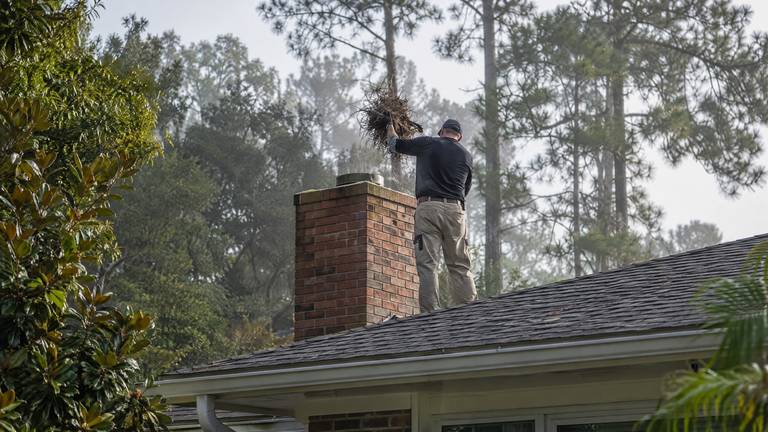
Looking down a chimney means climbing onto a roof, often a pitched one, and leaning over the top of the stack. Add a startled animal and that becomes a real fall risk. An animal cornered at the top of a flue may also bite or scratch, which is a health risk as well as a safety one.
Please stay on the ground and describe what you have heard instead. Our crew brings the ladders and tools for the job, checks the top of the chimney safely and tells you exactly what was found, from the entry point to the condition of the cap.


