
Chimney Services
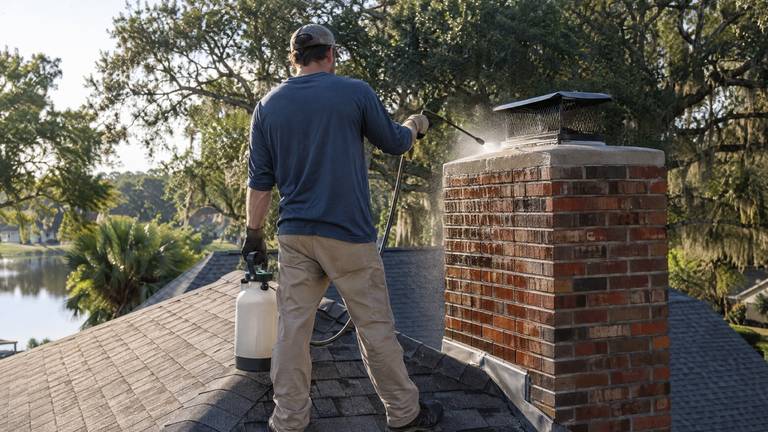
Inside a chimney waterproofing job in Indian Mound Village
Why chimneys are good candidates for a repellent
Most well-built brickwork does not need a clear water repellent under normal exposure, according to Technical Note 6A. The same note lists chimneys, along with parapets and barrier walls, as brickwork that is particularly vulnerable to water absorption and where a repellent can be useful.
A chimney stands above the roof with every face exposed and no eaves to shelter it. That is why a breathable repellent can earn its place on a sound chimney in Indian Mound Village, and why we still check the repairs first. Sound, absorbent brick gains the most from a treatment, while open joints need masonry work before any product.
Visibly dry brick on the day of treatment
Dew, a passing shower or an overflowing gutter can leave brick damp even under a clear sky. The ChimneySaver instructions ask for visibly dry surfaces and rules out wet or saturated masonry, while Technical Note 6A notes that some siloxanes and silanes tolerate slightly damp surfaces.
Our crew checks the brick on each face before starting and waits for wet areas to dry, following the instructions for the product being used. That patience is part of a treatment that works.
Asking the brick maker when it is known
Brick is not all alike. Technical Note 6A suggests consulting the brick manufacturer, whenever possible, before selecting a coating, since the properties of each brick are unique and can affect how a coating performs.
For most homes the maker is unknown, and the test area does that job instead. Where the brick is known or unusual, our specialists take that into account when choosing the repellent for your Indian Mound Village chimney. A chimney repaired over the years may mix bricks from different sources, and the test area shows how each kind takes the product.
Caring for a treated chimney
A treated surface still needs occasional care. One repellent's data sheet recommends removing staining contaminants promptly and notes that occasional cleaning with mild detergent and water generally restores the treated surface's appearance.
Beyond cleaning, keep an eye on the parts a repellent does not protect: the cap, the crown, the flashing and the joints. A look after a big storm, and a call if something has moved, keeps small problems small. When the next treatment is due, we check the surface first instead of assuming it needs another coat.


