
Our Services
The chimney crown, repaired from the top down
Written prices on every crown repair, from a family-owned local team, with no hidden fees.
What the crown does at the top of the chimney
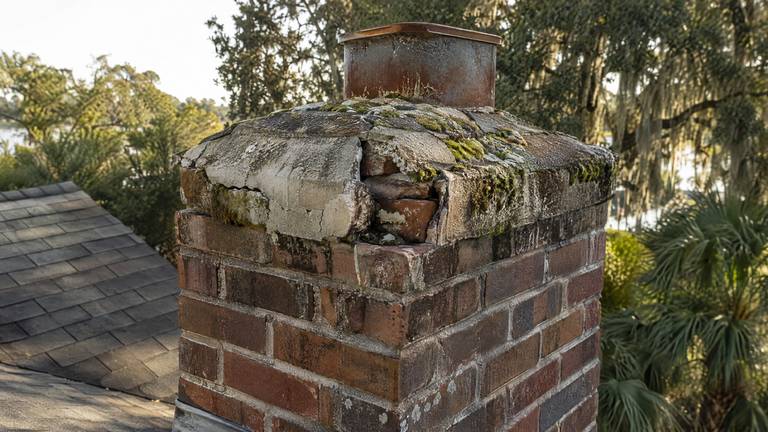
Around the flues at the top of a masonry chimney sits a slab of concrete or mortar, the crown. It meets the rain first and should throw it clear of the brick. In Florida Building Code terms it is a cap of concrete, metal or stone, pitched to shed water, edged with a drip and kept apart from each flue liner by a caulked bond break.
Once the crown cracks or loses its slope, water gets into the upper brick, reaches the flue joints and eventually shows up at the fireplace or on a ceiling. Repairing it early usually keeps the job to the crown alone.
Precast and cast-in-place crowns
A crown can be cast on the chimney or made in advance and set on a mortar bed. The Brick Industry Association says prefabricated caps generally perform better than cast-in-place ones and are more easily made water-resistant, and it recommends that a cast-in-place crown follow the same shape, with thickened sides and an overhang.
Both can be done well. The choice depends on the chimney's size and shape, access to the roof and how the flues are arranged. We explain which approach fits your chimney and price it in writing before any work starts.
Crown coatings on a sound crown
A brushable crown coating forms a flexible waterproof skin over a crown that is still solid. The data sheet for one widely sold product, SaverSystems All Weather CrownCoat, requires a surface that is structurally sound, clean and dry, and the coating is brushed on thick enough to fill voids and small cracks.
On a solid crown with fine cracks, that skin is an economical fix. On a crown that is loose, crumbling or flat, it is money spent on a surface that will fail under it. We say plainly which crown you have and quote a coating only when it can do its job.
Heat and rain limits for crown coatings
Coatings have weather rules. The same CrownCoat data sheet says surface and air temperature should not exceed 95 degrees Fahrenheit at application, and that the product should not go on a wet surface or when rain is expected within four hours unless the crown is protected.
On a Florida roof in summer, those limits matter. We schedule coatings for the cooler part of the day, check that the crown has dried out from the last storm and cover it if a shower threatens. A coating rushed onto a hot or damp crown wastes the product and your money.


