
Our Process
How chimney waterproofing is done in Goldsboro
Penetrating repellent versus a surface film
Clear masonry coatings fall into two families, according to Brick Industry Association Technical Note 6A. Film formers such as acrylics, urethanes and waxes leave a continuous layer on the surface. Penetrants such as silanes and siloxanes soak into the masonry, up to about 3/8 inch deep, and leave no surface film.
For an exterior chimney the difference is practical. A film can look glossy, trap moisture and eventually cloud or flake, while a penetrant changes how the pores take up water and leaves the surface looking much as it did. Our specialists use penetrating repellents on Goldsboro chimneys and name the product on the estimate.
White salt deposits and waterproofing
White efflorescence on brick is salt carried to the surface by water. BIA efflorescence guidance says the cause is usually moisture and that reducing water penetration comes before removing the deposits. Technical Note 6A adds that salts can become trapped under a film-forming coating or a low-permeability repellent and damage the brick.
So the water that carried the salts is traced first, and the deposits are removed before any treatment. Efflorescence that weathering leaves behind can usually be dry brushed away, according to the same guidance. Only then do we consider a breathable repellent for your chimney.
The weather window for a water repellent
Repellents have application limits, and the product's maker sets them. One chimney repellent's data sheet asks for surface and air temperatures between 40 and 100 degrees F for three hours after application, no application to wet or saturated surfaces, and no application when rain is expected within six hours unless the surface is protected.
Our crew plans your Goldsboro job around those limits. If rain is due or the brick is still wet from a morning shower, the application moves to a better day, since a repellent applied outside its conditions may not perform as its maker intends.
Protecting glass, paint, plants and shingles
Chemistry that bonds to brick can also mark what sits next to it. Technical Note 6A warns that coating chemicals can etch glass, damage paint and kill vegetation, and the ChimneySaver instructions ask for glossy surfaces, paint films, windows, plant life and asphalt-based materials to be protected from overspray and run-down.
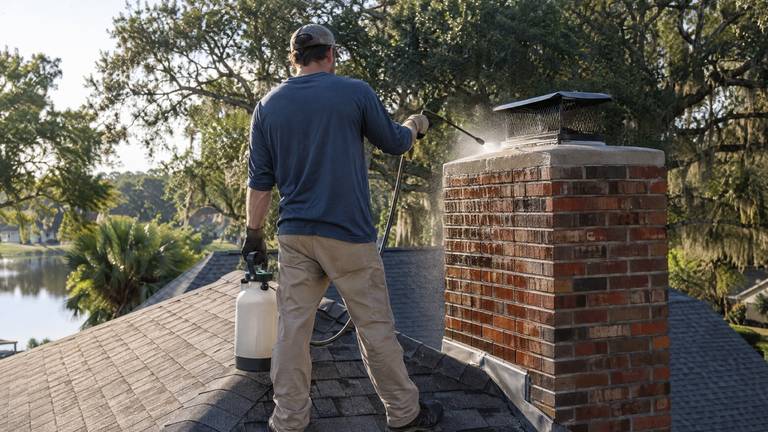
On a shingle roof, the shingles sit right at the base of the chimney, so masking the roof is part of the job. Our crew covers windows, trim, plantings and the roof around your Goldsboro chimney before we start, and any accidental overspray is cleaned off right away with soap and water, as those instructions direct.


