
Our Services
Chimney leak repair from the top down
Across Goldsboro, we trace chimney leaks and repair the part that lets water in.
Checking entry points from the top down
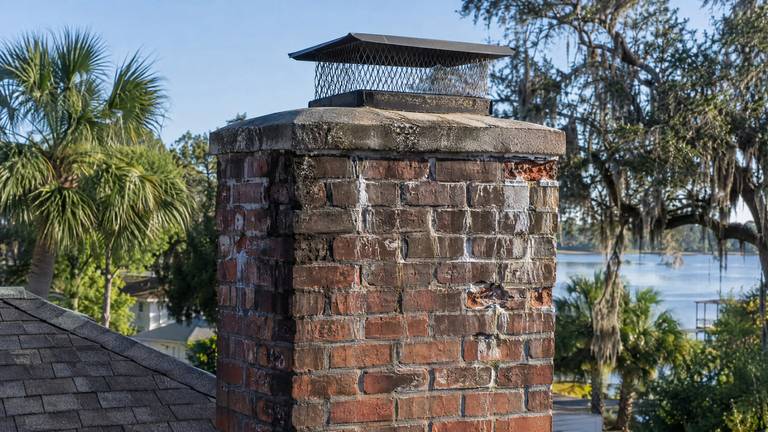
Water travels downhill, so the search starts at the chimney top. We check the cap and the flue opening first, next the crown and the joint at the flue tile, then the brick and mortar, and last the flashing where the chimney meets the roof.
Following that order stops us from repairing something low while the real entry sits higher up, and it catches chimneys that leak in two places at once. Each finding is recorded with how strongly the evidence points to it, so the estimate starts with the likely cause and does not overlook the others.
White deposits as a moisture clue
White powder on the chimney faces or inside the firebox is mineral material carried to the surface by water moving through the masonry. It shows where moisture has traveled and dried.
Light deposits can be removed by dry brushing, and harsh acids are avoided because they can damage brick. The deposits themselves are a clue rather than the problem, so we use their location to help trace where water is entering. Once the leak is stopped, new deposits should slow and then stop appearing.
Leaks with more than one source
A chimney can have two defects at once, such as a cracked crown and loose counterflashing. Repairing one reduces the leak while the other keeps it going.
The estimate lists each repair on its own line, with the reason it is included, so you can see how the whole leak is being addressed. If you prefer to repair in stages, we explain which item is most likely to stop the water first and what to watch for afterward.
Mixed metals on the chimney top
Galvanized steel gives up its zinc faster when it touches other metals in wet conditions, according to the American Galvanizers Association. Mixed fasteners and parts on a cap, a chase top or a run of flashing can rust through early.
Replacement metal parts go on with compatible fasteners and materials, so the new work does not start rusting at its joints. The estimate names the metal chosen for a cap or cover, so you know exactly what goes on the roof.


