
Our Services
The parts of the system we inspect
Any service your inspection leads to is 10% off when booked within 72 hours.
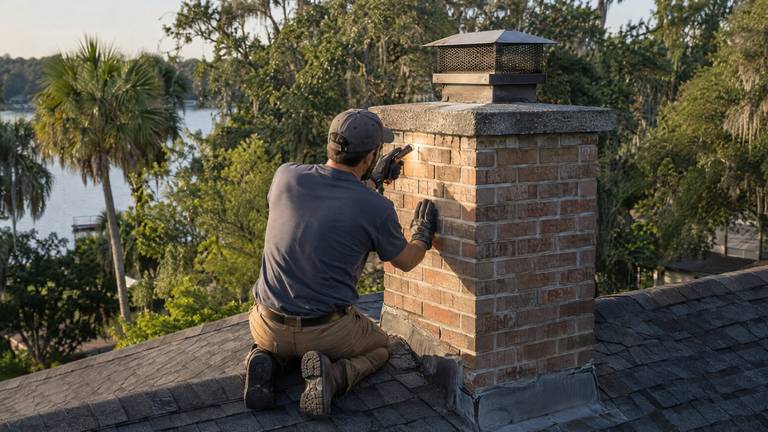
The crown at the top of the masonry
The crown is the concrete or stone slab that closes the top of a brick chimney around the flue. Under the Florida Building Code it must slope to shed water and have a drip edge. From the roof, we look for cracks, low spots where water sits and edges that no longer throw rain clear of the brick.
We also check the joint where the crown meets the flue tile. A crown cast tight against the tile can crack as the two materials move at different rates. Any damage is described with its likely effect on water entry and with the repair that would answer it, from sealing hairline cracks to rebuilding.
Brick faces and mortar joints
Every face of a masonry chimney gets a look for cracked or flaking brick, open joints, leaning and white mineral deposits. Those deposits show where water has moved through the wall and dried at the surface.
We note where the damage is concentrated and whether it sits at the surface or deeper in the joint. Damage on one face only can point to how rain reaches the chimney, while damage near the roof line can point to the flashing. That tells you whether repointing, brick replacement or a larger repair is worth pricing, and in what order the work makes sense.
Glass doors and screens at the opening
Glass doors and mesh screens stand between the fire and the room. We check that the doors open and close properly, the glass is not cracked and the frame is secure against the fireplace face.
On a factory-built unit, doors must be a type listed for that model. Replacement doors that were not listed for the unit are noted, because they can change how the fireplace handles heat. For a masonry fireplace, we look at how the frame is fastened and whether gaps around it let smoke escape into the room.
Vent paths for gas fireplaces
A gas fireplace vents through the pipe or chimney its maker specifies, and each model has its own termination, clearances and approved parts. The inspection follows the visible vent path from the unit to its termination.
We look for separated joints, a damaged termination cap, blocked openings and signs of heat or moisture along the route. Appliance repairs follow the maker's instructions for that model and are priced separately. If the vent path cannot be traced, the findings say which section was out of view.


