
Chimney Services
Chimney rebuilding explained for Geneva
Questions every homeowner in Geneva should have answered before a chimney rebuild.
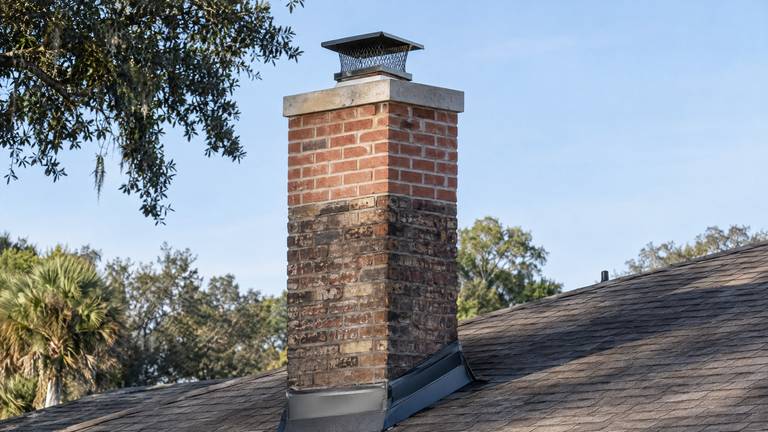
A new crown on the rebuilt top
Every rebuilt masonry chimney gets a new cap on top, usually called the crown. The code lists four things for that cap in section R1003.9.1: concrete, metal or stone as the material, a slope for runoff, a drip edge, and a bond break sealed with caulk wherever a flue liner comes through.
The slope keeps rain from pooling, the drip edge throws water clear of the brick below, and the bond break lets the liner and crown move separately as they heat and cool. A thin mortar wash troweled over the top course does none of that well, so we form and cast a proper crown on every rebuild and list it on the estimate.
We also make sure the crown overhangs the brick far enough for the drip edge to work, and we seal the joint around the flue liner with a flexible sealant instead of hard mortar.
Partial or full rebuild
Most rebuilds are partial: the top section comes down to sound masonry and goes back up new. A full rebuild, taking the chimney down to or near its base, is a much larger job and is proposed only when the damage or movement runs that deep.
We tell you which one fits your chimney, why, and what we saw that points that way. If a partial rebuild would leave an unsound section below, we tell you, and if a smaller masonry repair would still hold, we tell you that too. The choice is yours, made with the full picture and the price of each option in writing.
A full rebuild also takes longer and often involves more trades, so we set out the schedule, the access plan and any work inside the house before you decide.
Curing time before the first fire
New mortar and a freshly cast crown have to cure before the first fire heats them. Brick industry maintenance guidance calls for replaced masonry to be properly cured before it carries load.
We give you a date when the fireplace can be used again, and we ask you to wait until then even if the chimney looks finished. Lighting a fire too early can crack a new crown or weaken fresh joints. Weather can shift the schedule, and we let you know the same day if it does.
When you do light the first fire, keep it small and short. That gives the new masonry a gentle first warm-up before the chimney goes back into regular use.


