Our Work
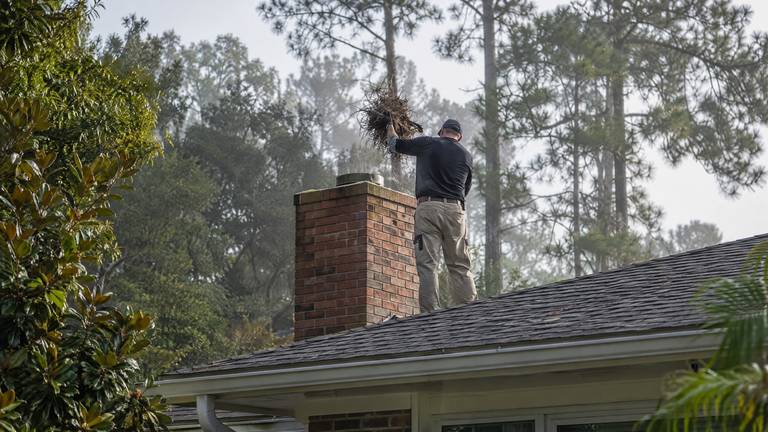
Clearing and protecting a chimney in Geneva
Who may remove nuisance wildlife in Florida
Florida's nuisance wildlife rule lets a property owner take nuisance wildlife, or authorize another person to do it on the owner's behalf, subject to the rule's exceptions. Protected species such as chimney swifts are handled under their own rules. The owner's authorization is what allows someone else to act on the property.
In practice, that means you decide who works on the animal side. Where capture is needed, we coordinate with a wildlife professional you authorize and handle the chimney work ourselves. Our specialists spell out which part of the job we do and which part we arrange.
Why smoke and fire are never the answer
It is tempting to light a small fire and let the heat drive an animal up and out. That can injure or kill the animal, it breaks the protections that apply to swifts and bats, and it can ignite dry twigs and nest material packed into the flue.
Keep the fireplace cold until the chimney has been inspected and cleared. Our specialists confirm when the flue on your Geneva home is empty and open, and only then is the fireplace ready to use again. If the damper is stuck open, tell us, and we explain how to keep the room closed off until the visit.
Finding how the animal got in
Most animals enter from the top: a missing cap, a torn screen, a cap knocked loose by wind, or a gap between a chase cover and the siding. Some find a gap at the crown or at a damaged flue top. A loose flashing gap or an opening in a framed chase can also let an animal into the space around the flue.
Our specialists check the whole top of the chimney during the free inspection and show you the entry point. The fix for that point is priced on its own line, whether it is a new cap, a screen repair or a separate chimney repair.
Animals inside a framed chase
On a factory-built fireplace, an animal may be inside the framed chase around the chimney pipe instead of inside the pipe itself. It usually gets in through a rusted chase cover or a gap where the cover meets the siding.
Access and repairs are different in that case. We check the chase cover, the pipe and the listed cap in Geneva, and once the animal is out, the gap is closed with the right repair for the enclosure. Our specialists also look at the siding and trim around the top of the chase, since a small gap there is enough for a squirrel.


