
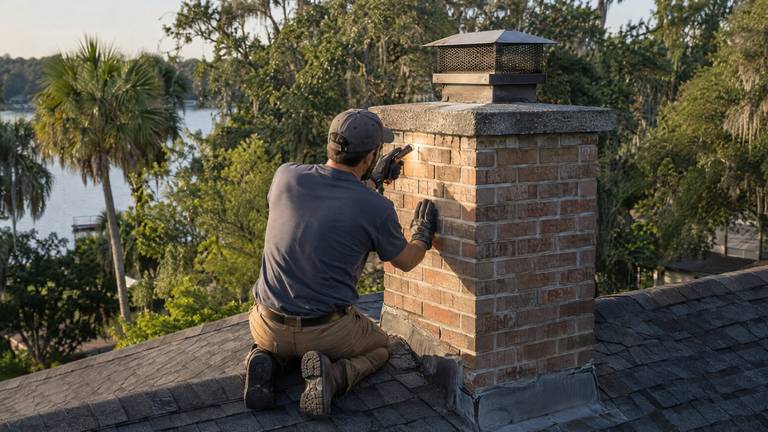
Chimney Inspection
Chimney inspection details for Gabriella homes
No pressure after the visit, and every recommended job is priced in writing before you decide.
Cap, screen and how the cap is fastened
A chimney cap keeps rain from falling straight into the flue and gives birds and animals a barrier. We check that the cap is present, fastened securely, free of heavy rust and clear of leaves or debris that could restrict the flow of exhaust.
The screen matters as much as the lid. A torn mesh lets animals in, and a clogged one holds back smoke. We also look at how the cap is attached, since a cap resting loosely on the tile can lift in a storm. If the cap should be replaced, we explain the size and material that suit the flue and price the replacement on its own line.
Chimney height against the roof
How high a chimney has to stand is written into the Florida Building Code. The top needs 3 feet of clearance over its own roof penetration, and it must also sit 2 feet above anything on the building that is within 10 feet. A chimney that falls short can struggle to draw.
An addition, a new roof line or a second story built nearby can change how an existing chimney relates to the roof around it. We point out any shortfall we observe and explain what an extension or another fix would involve. Height is one factor among several in how a fireplace draws, so it is never presented as the only answer to a smoke problem.
Chimney checks after a storm
After strong wind and rain, the chimney top takes the first hit. We check the cap fastening, new cracks in the crown, lifted flashing and any debris that has fallen into the flue.
Inside, we look for fresh water in the firebox or on the damper and for new stains on nearby ceilings. Storm damage is described with its location and its likely effect, so repairs can be scheduled in a sensible order. If a temporary cover is needed until repair day, it is priced as its own item.
Spark screens on masonry chimneys
Where a spark arrestor is installed on a masonry chimney, the Florida Building Code sets how fine its mesh may be and requires it to be accessible and removable for cleaning.
Holes, heavy clogging and corrosion in the screen are noted, along with whether it can still be removed. A screen packed with soot or leaves restricts the flow of exhaust, while a torn one no longer stops embers or animals. Cleaning or replacement is described in the findings.


