
Our Process
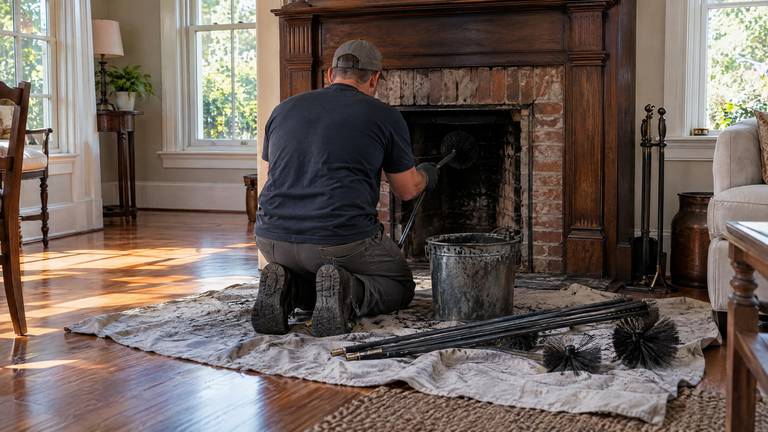
Removing hardened creosote from a chimney in Elder Springs
Sealing the fireplace opening
Removal products are not something you want in the living room. The PCR data sheet instructs covering the fireplace opening or the stove thimble so the product does not enter the living area, and it lists eye protection, a respirator, protective clothing and gloves for the people applying it.
Our crew seals the opening and protects the hearth and floor before anything goes into the flue. Please keep children and pets away from the fireplace and the work area until the cleanup is done. The seal stays in place until the treatment is dry and the flue has been swept.
Wood stoves with catalytic combustors
Each removal product has appliances it suits and appliances it does not. The Cre-Away data sheet says the powder is not recommended for wood stoves with catalytic combustors, and a stove's own manual sets out how its flue and connector are to be cleaned.
So we ask about the appliance before choosing a method. If your Elder Springs home heats with a catalytic stove, the removal plan is built around its manual, and we tell you which options that rules out. Where the manual allows only brushing, we say so plainly and plan the removal within those limits.
Annual inspection and creosote
NFPA 211, the national standard that covers chimneys, fireplaces and vents, sets a yearly inspection for soundness, deposits and proper clearances, and calls for cleaning whenever that inspection shows it is needed. The NFPA's safety tips give homeowners the same advice in plain terms: a qualified professional should clean and inspect the chimney every year.
A yearly check shows how fast deposits are returning, well before they become a removal job. After removing creosote from your Elder Springs chimney, we suggest a schedule based on how you burn, and you can book the next inspection whenever it suits you.
Stove connectors, inserts and the thimble
When a wood stove or insert is connected to the chimney, the connector pipe and the thimble where it enters the flue collect deposits too. The PCR data sheet specifically mentions covering the thimble during treatment, and the appliance's manual governs how the connector comes apart. A connector that is heavily coated inside can restrict the stove's draft as well.
Our crew disconnects and reconnects the appliance as its instructions direct, cleans the connector along with the flue and checks the joints before we leave. If a part is worn or corroded, you hear about it before anything is replaced.


