
Our Process
The craft behind repointing a chimney in Elder Springs
How worn chimney joints are found
Visual observation and light scraping with a metal tool are the usual ways to find joints that need repointing. Sound mortar resists the tool. Mortar that has lost its bond powders, flakes or lifts out in pieces, and a joint can look intact from the ground while the mortar behind its surface has turned to sand.
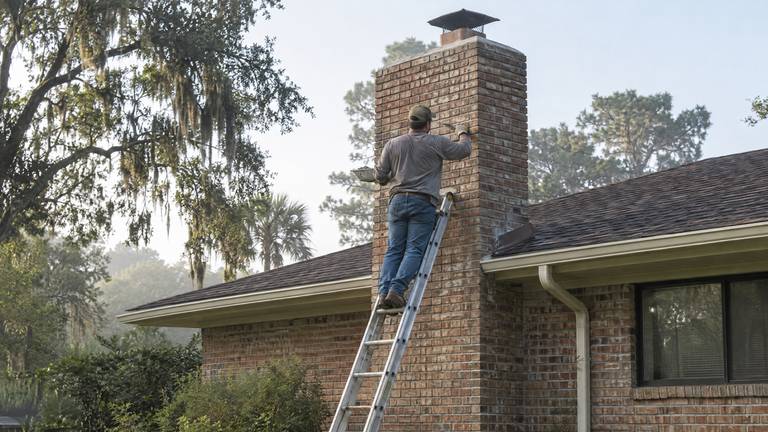
Our pros check the joints up close from the roof and from the ground, because the top of a chimney and its lower courses can wear at different rates. The result is a map of the joints that need work, described on the estimate by face and area instead of as a vague allowance.
Matching mortar color on a repointed chimney
Mortar color comes mainly from the sand and any pigment in the mix. Technical Note 46 recommends comparing new mortar samples with the existing joints both wetted and fully dry, since mortar changes shade as it dries, and it calls for metallic oxide pigments rather than organic colorants.
Where only part of a chimney is repointed, color is what the eye catches. We compare samples against your joints before work begins and show you the one we plan to use. A slight difference at first is normal, because new mortar is matched to unweathered mortar while the old joints have aged in the weather.
Weather and curing for new chimney joints
Heat and sun change how fresh mortar sets. The Park Service brief notes that wall temperatures between 40 and 95 degrees F prevent freezing or excessive evaporation of the water in the mortar, and it recommends working in shade, away from strong sunlight, to slow drying in hot weather.
For high-lime mortars the brief also describes light misting for a day or two after tooling so the joints do not dry out too fast. Our crew plans the work on your chimney around sun, heat and rain, and we tell you what care, if any, the new joints need once we leave.
What a tuckpointing estimate should say
A useful repointing estimate names the faces and the area of joints to be cut out, the removal method, the mortar type and how color will be matched. It also separates the joint work from brick replacement, crown repair or flashing, so each can be approved or deferred on its own.
Ours is written that way, with upfront pricing and no hidden fees. If more failed mortar turns up once the work is under way, we stop and show you before going further, and nothing is added without your approval.


