
Our Process
How chimney waterproofing is done in Chuluota
Letting the repairs prove themselves first
Patience is part of good waterproofing advice. After remedial repairs are completed and inspected, Technical Note 6A advises waiting several months to see whether a water repellent is still necessary, because moisture problems are often corrected by those repairs alone.
We are comfortable recommending that approach. If your Chuluota chimney stays dry after its repairs, you may not need a repellent at all, and if it still absorbs water, the treatment can be booked with better information in hand. Either way the decision is yours, and a follow-up look after the repairs is free.
White salt deposits and waterproofing
White efflorescence on brick is salt carried to the surface by water. BIA efflorescence guidance says the cause is usually moisture and that reducing water penetration comes before removing the deposits. Technical Note 6A adds that salts can become trapped under a film-forming coating or a low-permeability repellent and damage the brick.
So the water that carried the salts is traced first, and the deposits are removed before any treatment. Efflorescence that weathering leaves behind can usually be dry brushed away, according to the same guidance. Only then do we consider a breathable repellent for your chimney.
Applying a coating the way its maker intends
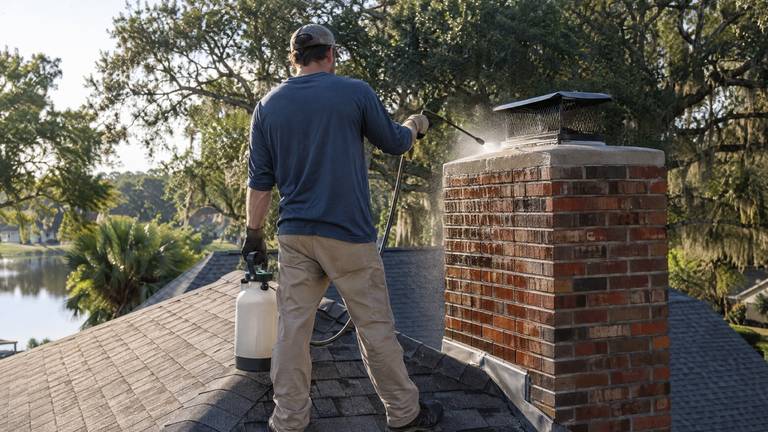
Experience with the specific coating matters, Technical Note 6A says, and it asks that coatings be applied according to the coating manufacturer's directions. Preparation, weather limits, coverage and the protection of nearby surfaces are all spelled out in those directions.
Chimney treatment is part of our regular masonry work, and we follow the product's own instructions on each of those points. Nothing is thinned, rushed or sprayed in the rain to finish early. Our workmanship warranty and our 100% satisfaction guarantee cover the finished treatment.
Chimney sealing before a home sale
A buyer's inspector may suggest sealing the chimney without saying whether repairs should come first. That leaves the seller guessing about scope and price, and the buyer unsure what will be done.
After a free inspection, you get a written plan: any repairs needed, whether a repellent is advisable and what each item costs. The plan is clear enough for both sides of the sale to read, and treatment can be fitted in before the closing when the weather cooperates.


