
Our Process
How glazed creosote is removed in Casselberry
The follow-up sweep that finishes the job
When the poultice has dried, the PCR data sheet says the surface looks cracked and part of the material will already have dropped into the thimble, onto the smoke shelf or into the firebox. The rest comes off with normal sweeping. The sweep also removes any product left in corners the dried material did not fall from.
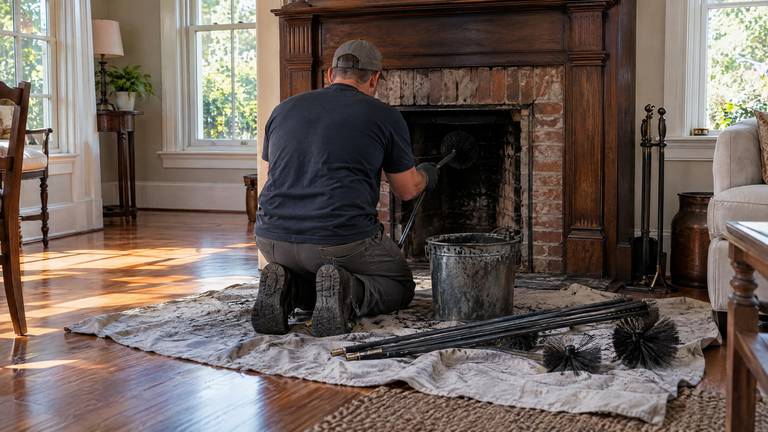
That sweep is part of the removal and appears on the estimate. Our crew brushes the flue, clears the smoke shelf and firebox, bags the debris and leaves the hearth clean, then shows you what came out of your Casselberry chimney.
Annual inspection and creosote
NFPA 211, the national standard that covers chimneys, fireplaces and vents, sets a yearly inspection for soundness, deposits and proper clearances, and calls for cleaning whenever that inspection shows it is needed. The NFPA's safety tips give homeowners the same advice in plain terms: a qualified professional should clean and inspect the chimney every year.
A yearly check shows how fast deposits are returning, well before they become a removal job. After removing creosote from your Casselberry chimney, we suggest a schedule based on how you burn, and you can book the next inspection whenever it suits you.
Leave the glaze for professional removal
Scraping at glaze from the firebox, spraying unfamiliar products up the flue or trying to burn a deposit off with a hot fire can make the situation worse. Creosote is combustible, EPA notes, and enough of it can cause a chimney fire.
Leave the deposit as it is, keep the fireplace unused and describe what you have seen when you get in touch. Our specialists assess it safely from the top and the bottom of the chimney during the free inspection. A short description of what you see from the room is enough for us to start planning the visit.
A chimney cap while the treatment dries
Rain falling into an open flue can rewet a drying poultice. The PCR data sheet recommends a chimney cap to protect the material while it dries, which makes the cap part of the plan for an uncapped chimney.
A sound cap on your Casselberry chimney stays as it is. Where there is none, or the cap is damaged, the options are explained and a new cap is priced as its own line, so you can decide with the full picture. A sound cap also keeps rain and debris out of the clean flue once the job is finished.


