
Chimney Services
Liner installation details for Black Hammock homes
Every liner is sized to the appliance it serves, and the full system is priced in writing first.
The appliance decides the liner
The fuel, the appliance model and the way it connects set the requirements for the liner. A liner that suits one appliance is not automatically suitable for another, even when both would fit the same chimney.
Before recommending a liner, we identify the appliance in use and any appliance you plan to install. If a change is coming, the liner is chosen for the new appliance, so you are not paying to reline twice. The appliance's installation manual is where those requirements are written, so we work from it rather than from rules of thumb.
When a liner needs insulation
Under UL 1777, insulation is required when the chimney does not meet the construction standard for its walls and clearances. One maker also notes that insulation helps the draft, keeps exhaust warmer and reduces condensation.
Insulation is part of the listed system, never an optional extra to drop when space is tight. We explain whether your chimney needs it and include the insulation, its fitting and its effect on liner size in the estimate. Where the passage is too tight for an insulated liner of the required size, we explain the alternatives rather than leaving the insulation out.
Liners for gas appliances
Gas appliance venting is sized under NFPA 54 and the appliance maker's instructions. Burning gas produces water vapor, so a liner that is too large or too cold can collect condensation.
Some gas appliance listings allow aluminum liners, while others call for stainless steel. We follow the specific appliance's instructions, and when those instructions call for a model-specific vent kit, we explain that instead of offering a generic liner. The appliance model and its vent instructions are confirmed on site before any liner for a gas appliance is priced.
Crown repairs before the top plate
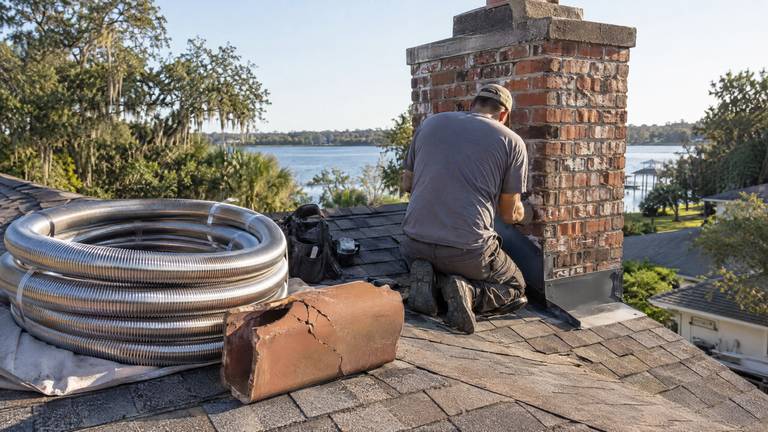
Cracks in the crown are to be repaired before the liner is installed, according to one liner maker's instructions. The top plate and cap need a sound surface to seal against.
When the crown needs more than crack repair, we explain whether it should be rebuilt before relining. The crown work is priced on its own line, so you can see it next to the liner system and decide with both in view. A new top plate set on a failing crown would leave the new liner exposed to the same water the crown lets in.


