
Chimney Services
Sealing your Black Hammock chimney, from prep to final coat
Applying the repellent from the bottom up
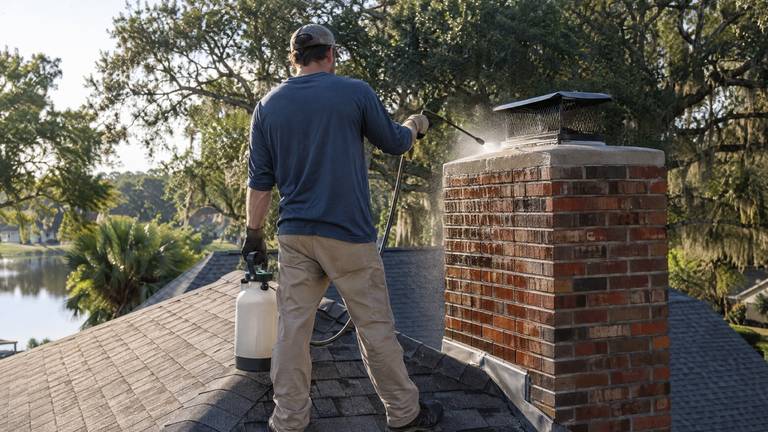
Vertical masonry is treated from the bottom up. Instructions for one water-based chimney repellent call for a low-pressure sprayer with a fan nozzle or a roller, with the surface flooded until runoff reaches six to eight inches below the spray pattern, followed by a second wet-on-wet pass within three to five minutes.
That saturating method is how the product gets deep enough into the masonry to work. It is slower than misting a light coat across the chimney, and it is the method our crew follows on Black Hammock homes. Each face is finished before the next one starts, and runs are brushed out so the treated surface dries evenly.
Chimney surfaces that stay untreated
Some parts of a chimney should not get a masonry repellent. One manufacturer's instructions rule out asphalt-based materials and painted or glazed brick, and describes the product for exterior, above-grade masonry, which leaves out the flue lining and the metal flashing.
We mask what should stay untreated and treat only the surfaces the product is made for. If the cap, flashing or crown needs work, that is quoted as a repair on its own line.
Why we avoid film-forming sealers on chimneys
Film formers can bridge hairline cracks, Technical Note 6A acknowledges, but they also hold back evaporation through the brick face. When moisture gets behind them, the note warns of clouding and spalling, and it names acrylics, stearates, mineral gum waxes and urethanes among the film-forming products.
A chimney is exactly the kind of masonry that needs to dry out after rain, so a surface film is a poor trade on a chimney. We recommend penetrating, vapor-permeable repellents and explain the reason on the estimate.
Reading dark and damp patches on the brick
After rain, a chimney dries unevenly. Faces that stay dark for days, a band of dampness under the crown or dark streaks below a joint all point to where water is getting in and how slowly the brick releases it.
Our specialists read those patterns during the free inspection. Evenly absorbent brick is a candidate for a repellent, while concentrated wet areas usually lead back to a joint, crack, crown or flashing that needs repair first. We show you the patterns on your Black Hammock chimney, so the recommendation makes sense to you as well as to us.


